
Industry Insights
-

Dry Cleansing Wipes: Define the Product Before Calling It a Cotton Tissue
Dry cleansing cloths need precise material and use descriptions. Buyers should distinguish fibre content, wet-use performance and packaging without relying on familiar category names.
-
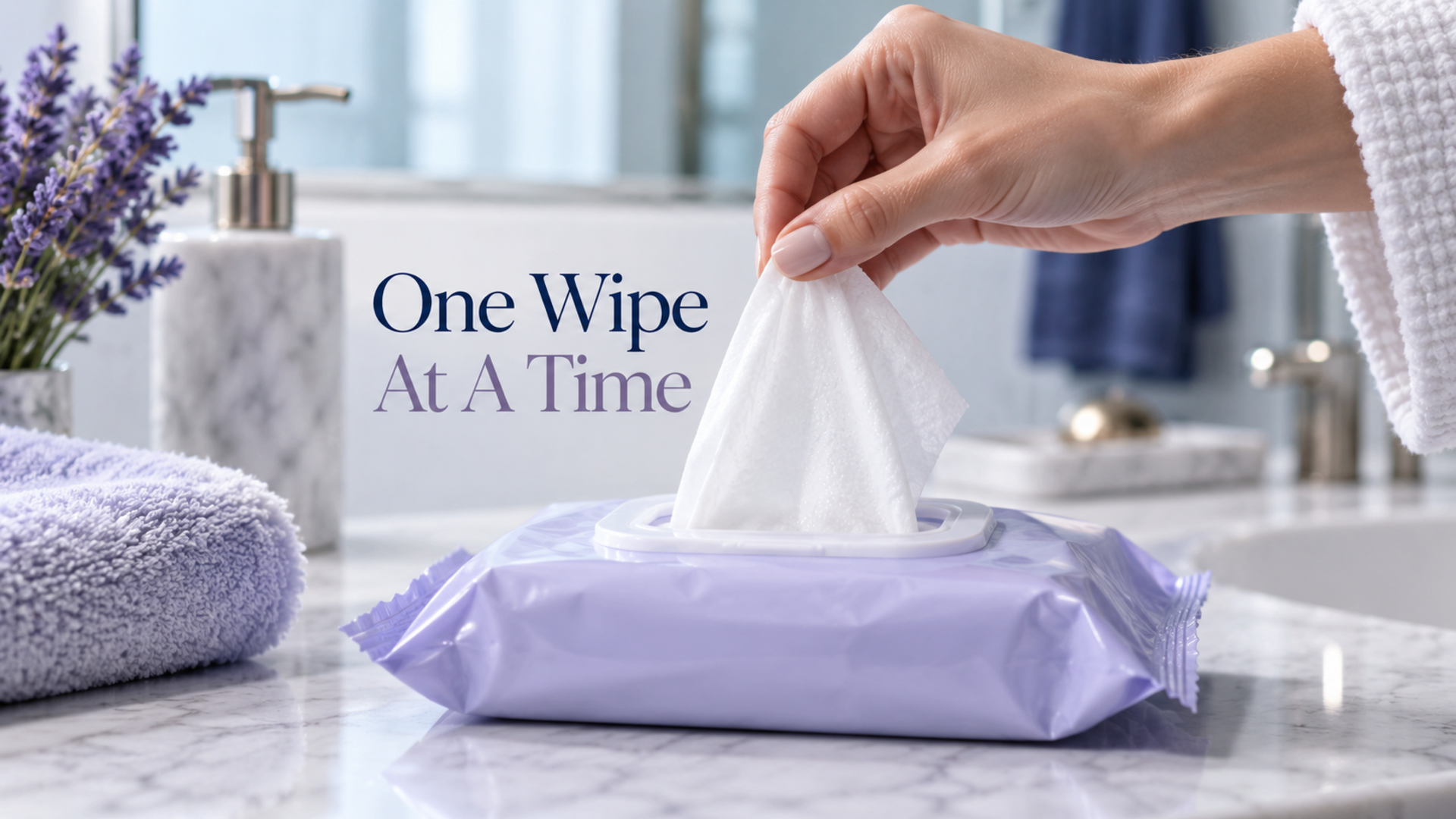
One Wipe at a Time: Design the Dispensing Experience into the Brief
Sheet separation, opening design and pack closure deserve a place in wet-wipe development. A good sample review follows the pack from its first wipe to its last.
-
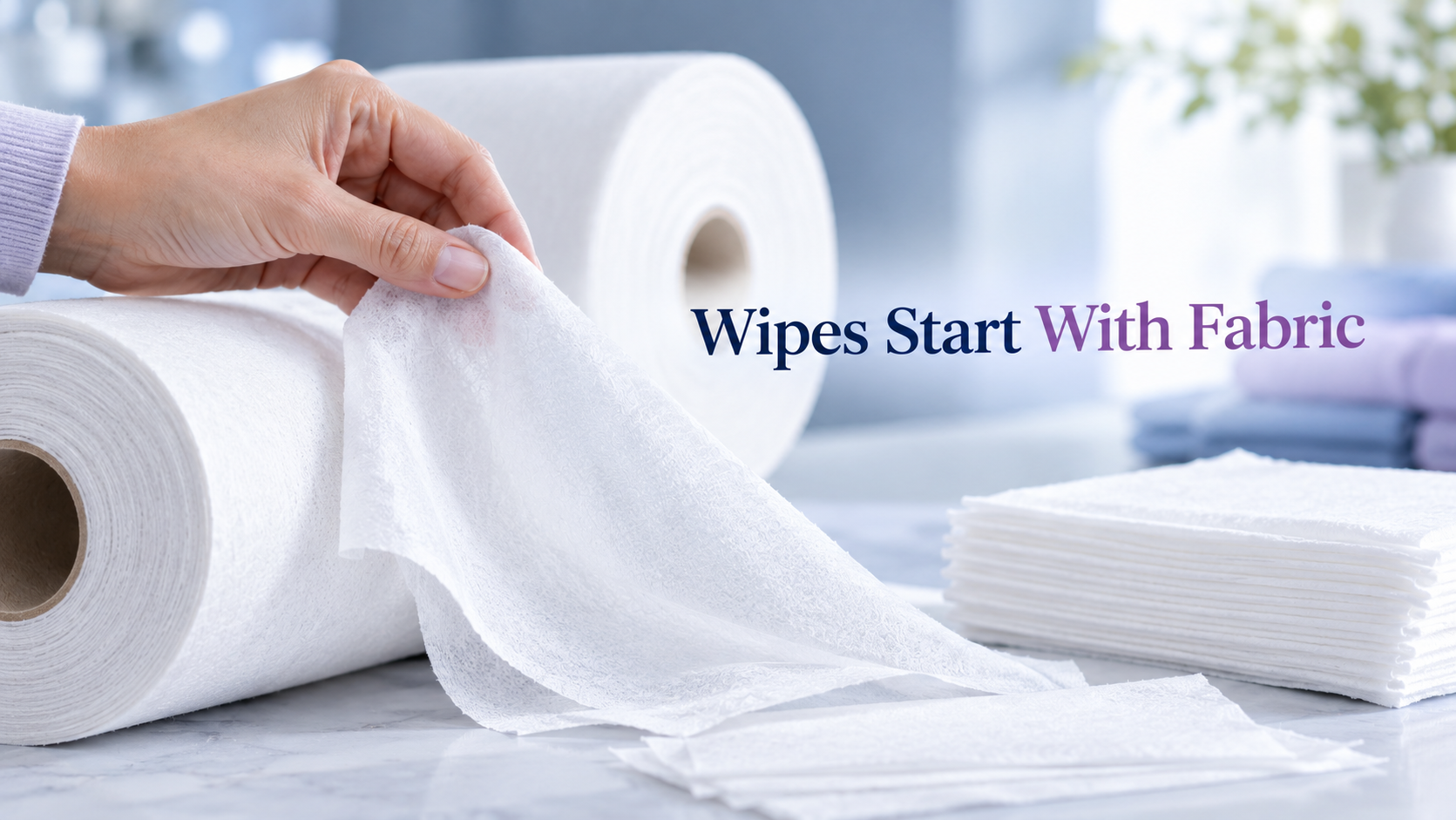
Wet Wipe Substrates: Why GSM Is Only One Part of the Specification
Basis weight helps describe a wipe, but fibre composition, structure and finished-pack behaviour are needed to make a meaningful comparison.
-

Disposable Underpads: Compare Usable Coverage, Not Just Outer Size
An underpad’s stated dimensions do not describe its complete performance. Buyers should define the absorbent area, intended surface and handling conditions in the brief.
-
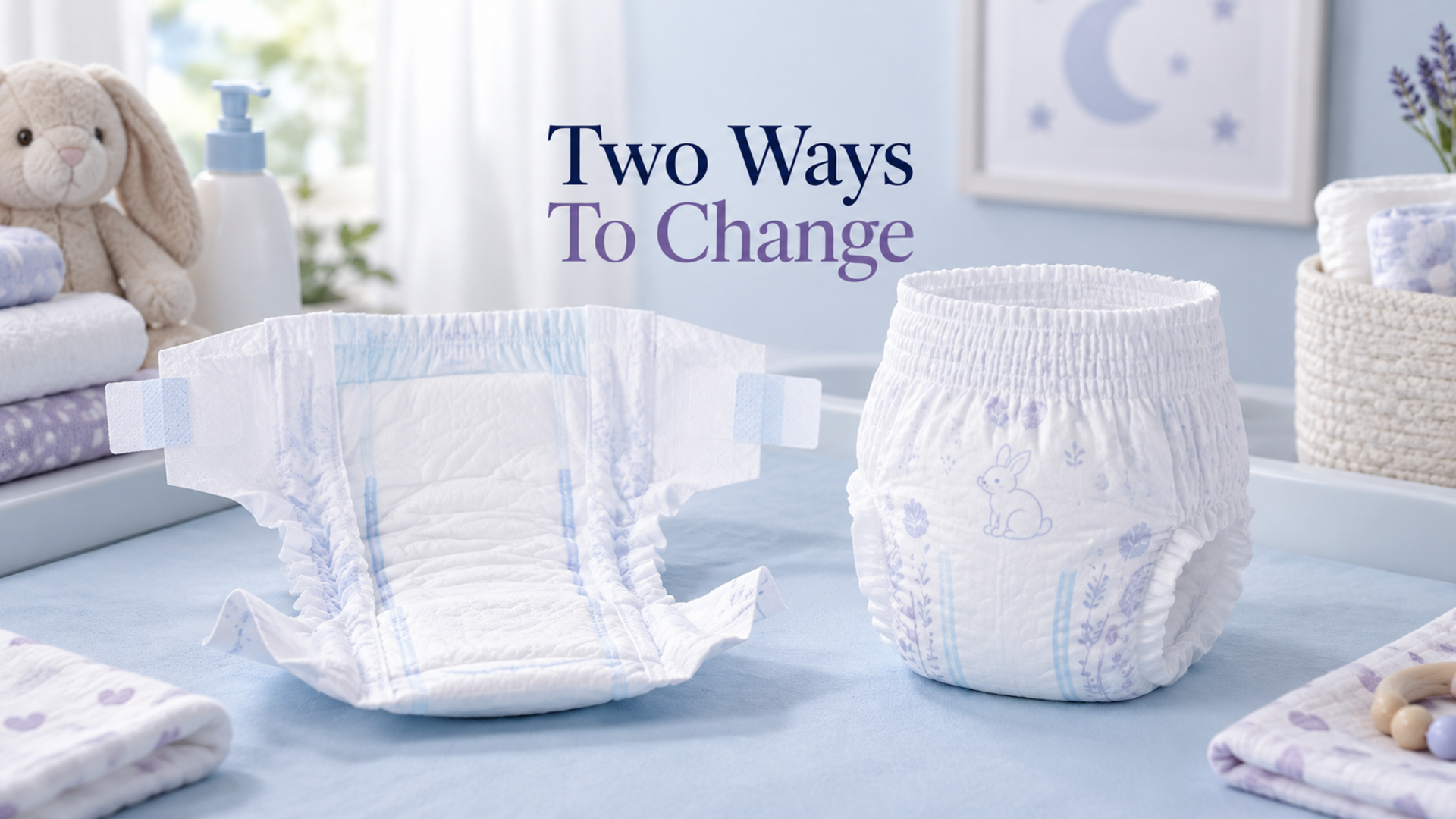
Tape Diapers and Pull-On Pants: Build the Range Around the Changing Routine
Baby diaper format is a practical design choice. A range brief should connect the way a diaper is put on and removed with fit, handling and clear product language.
-

Pantyliner Range Design Starts with a Clear Everyday Purpose
A pantyliner range becomes easier to understand when shape, format and packaging describe a defined use occasion instead of borrowing promises from other products.
-
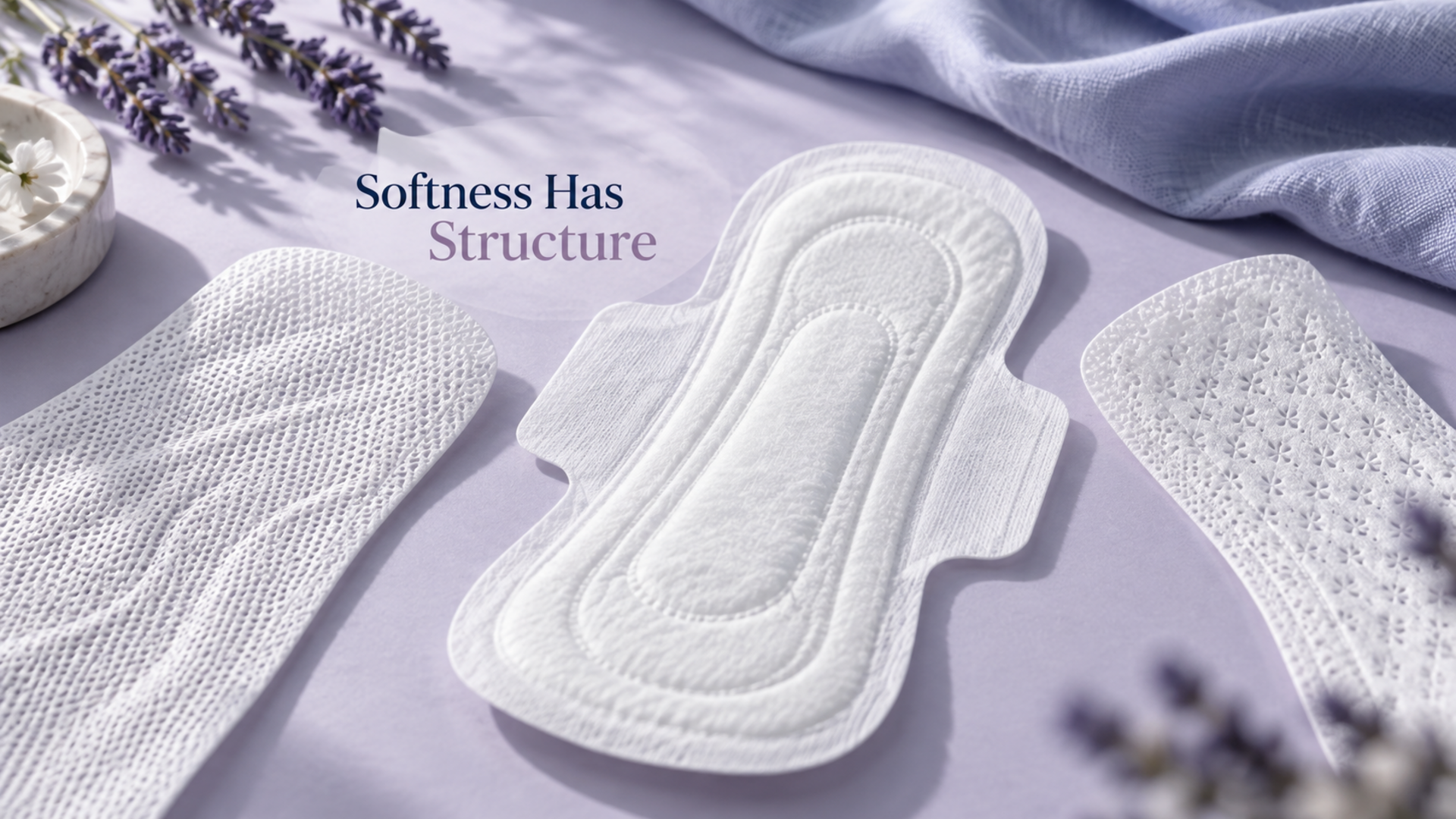
Sanitary Pad Topsheets: How to Turn “Soft” into a Clear Product Brief
Softness is useful only when buyers define what they mean. A topsheet brief should connect tactile preference, construction and the experience of the finished pad.
-
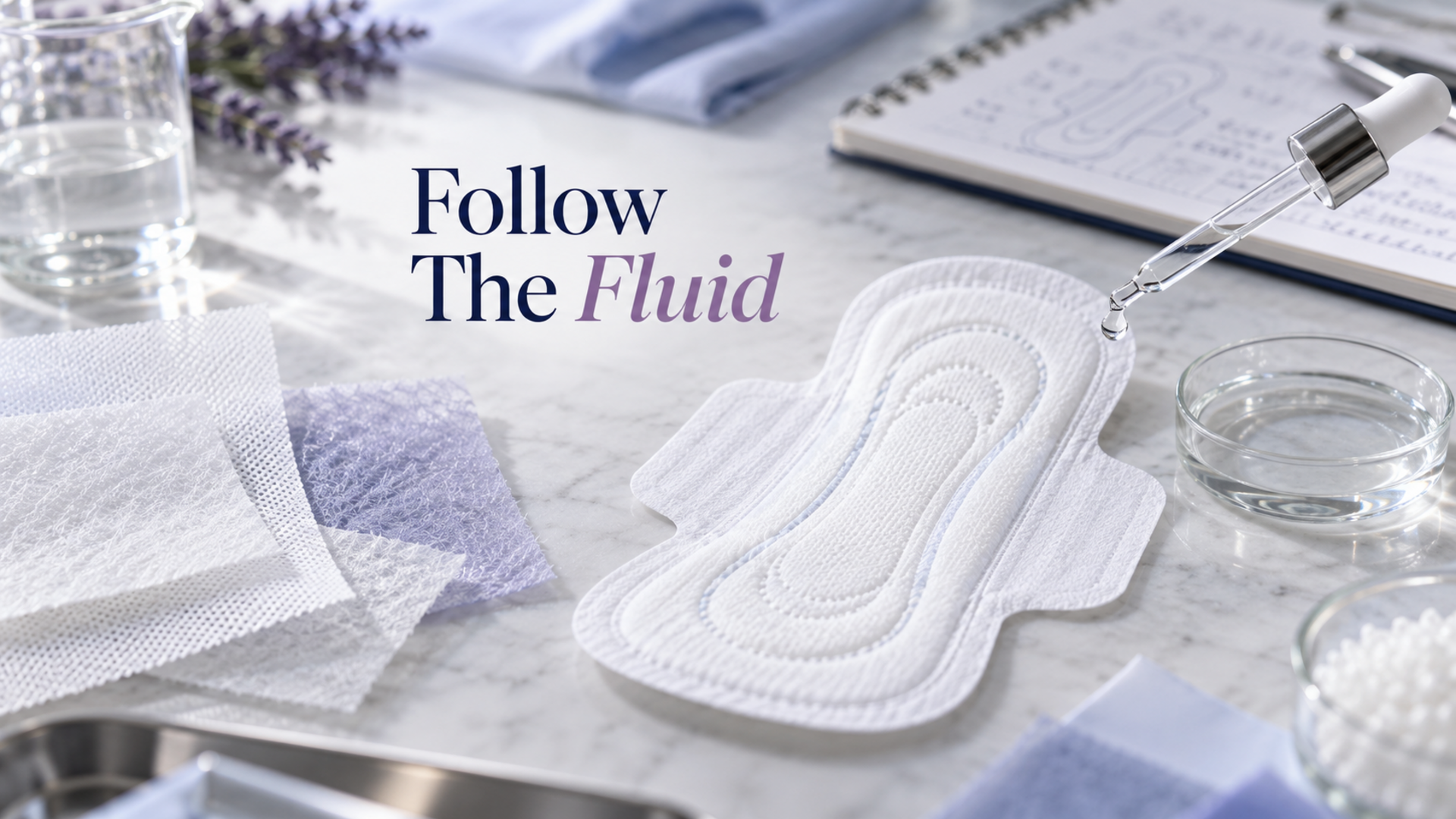
Acquisition, Distribution and Rewet: Three Different Questions About a Pad
A pad’s liquid-handling performance cannot be described by one capacity number. Buyers need to distinguish entry, movement and surface wetness under defined conditions.
-
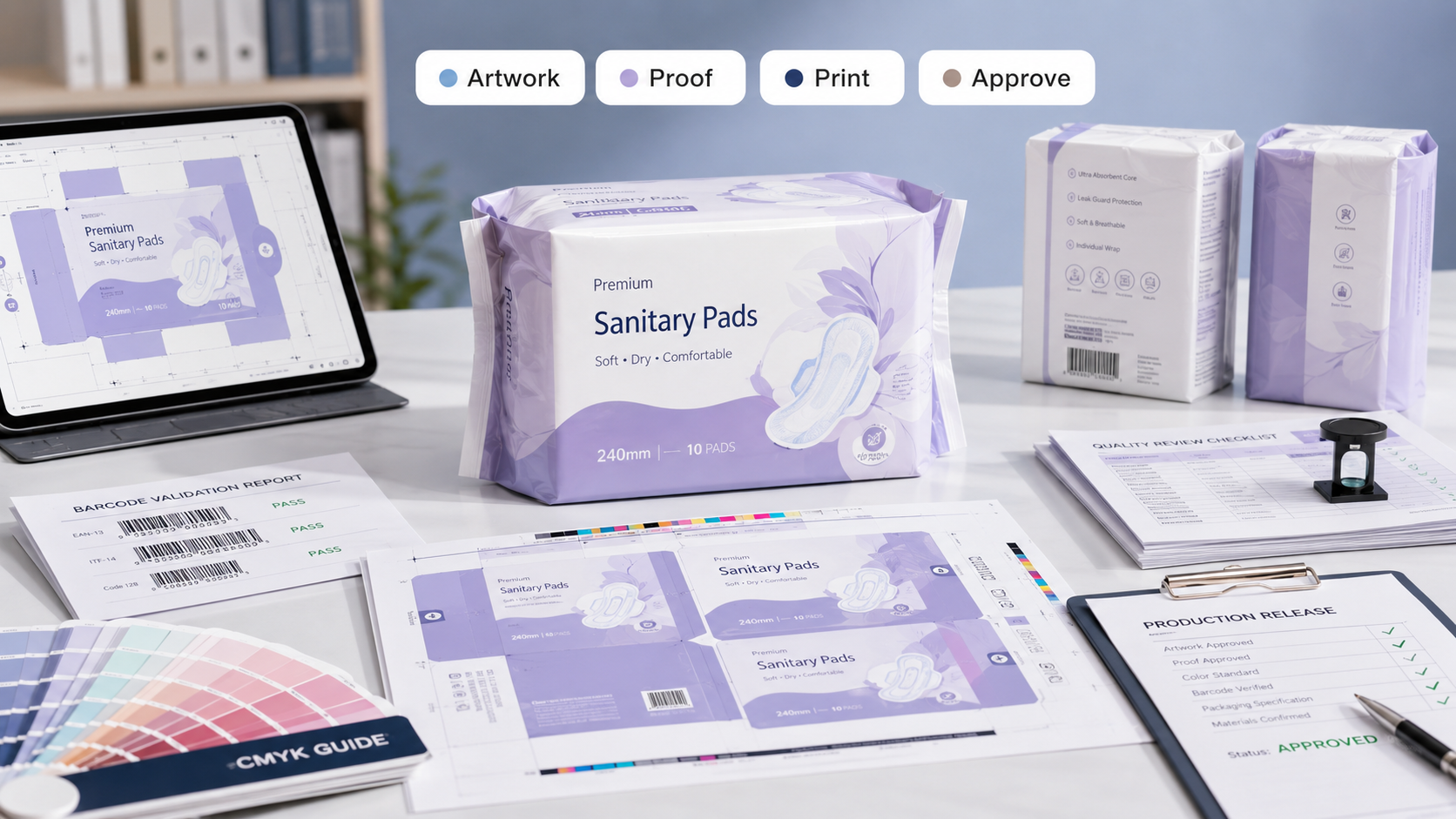
Private Label Sanitary Pad Artwork Approval Guide: Packaging Files, Print Proofing, and Production Preparation
A complete guide to sanitary pad artwork approval for private label brands, covering packaging file preparation, design specifications, print proofing, color management, barcode verification, compliance reviews, and production-ready approval workflows.
-
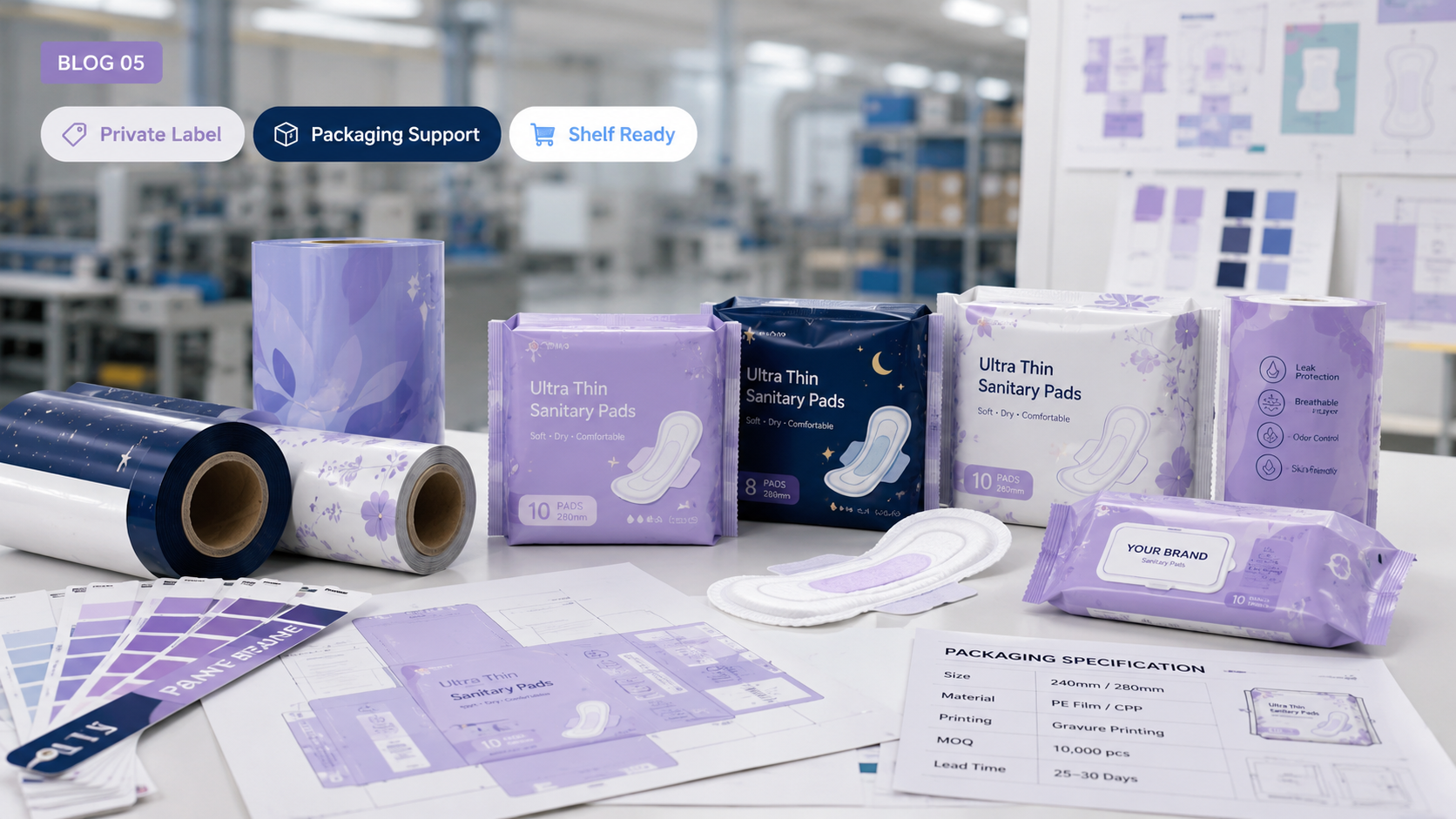
How Packaging Supports Private Label Sanitary Pad Projects
Packaging is not only a design element in sanitary pad OEM projects. It affects brand image, shelf presentation, product communication, and buyer confidence. This article explains why packaging matters and what private label buyers should consider before mass production.
-
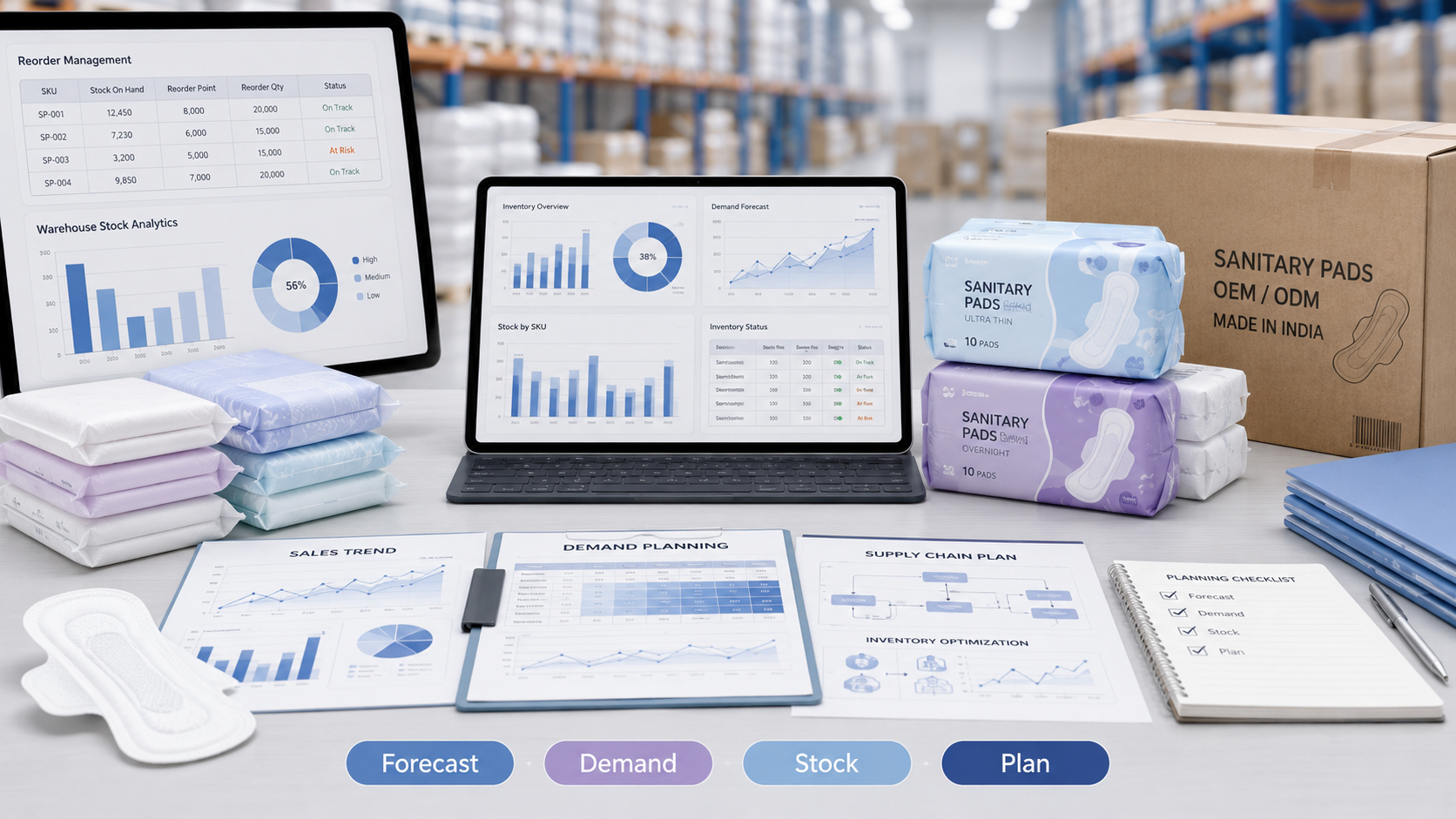
Private Label Sanitary Pad Inventory Forecasting Guide: Demand Planning, Reorder Strategies, and Stock Optimization
Learn how inventory forecasting helps sanitary pad brands improve demand planning, optimize stock levels, reduce shortages, manage reorder timing, and strengthen supply chain performance.
-

Private Label Sanitary Pad Warehouse & Distribution Guide: Inventory Management, Storage Standards, and Logistics Planning
A comprehensive guide to sanitary pad warehousing and distribution covering inventory management, storage requirements, warehouse operations, logistics planning, distributor support, stock control, and supply chain optimization for private label brands.