
Industry Insights / INJEOLLY JOURNAL
A consumer may like a wipe and still dislike its pack. If several sheets emerge together, the next sheet disappears inside or the closure is awkward to use, an otherwise promising product can become frustrating in an ordinary routine.
Define a realistic dispensing task
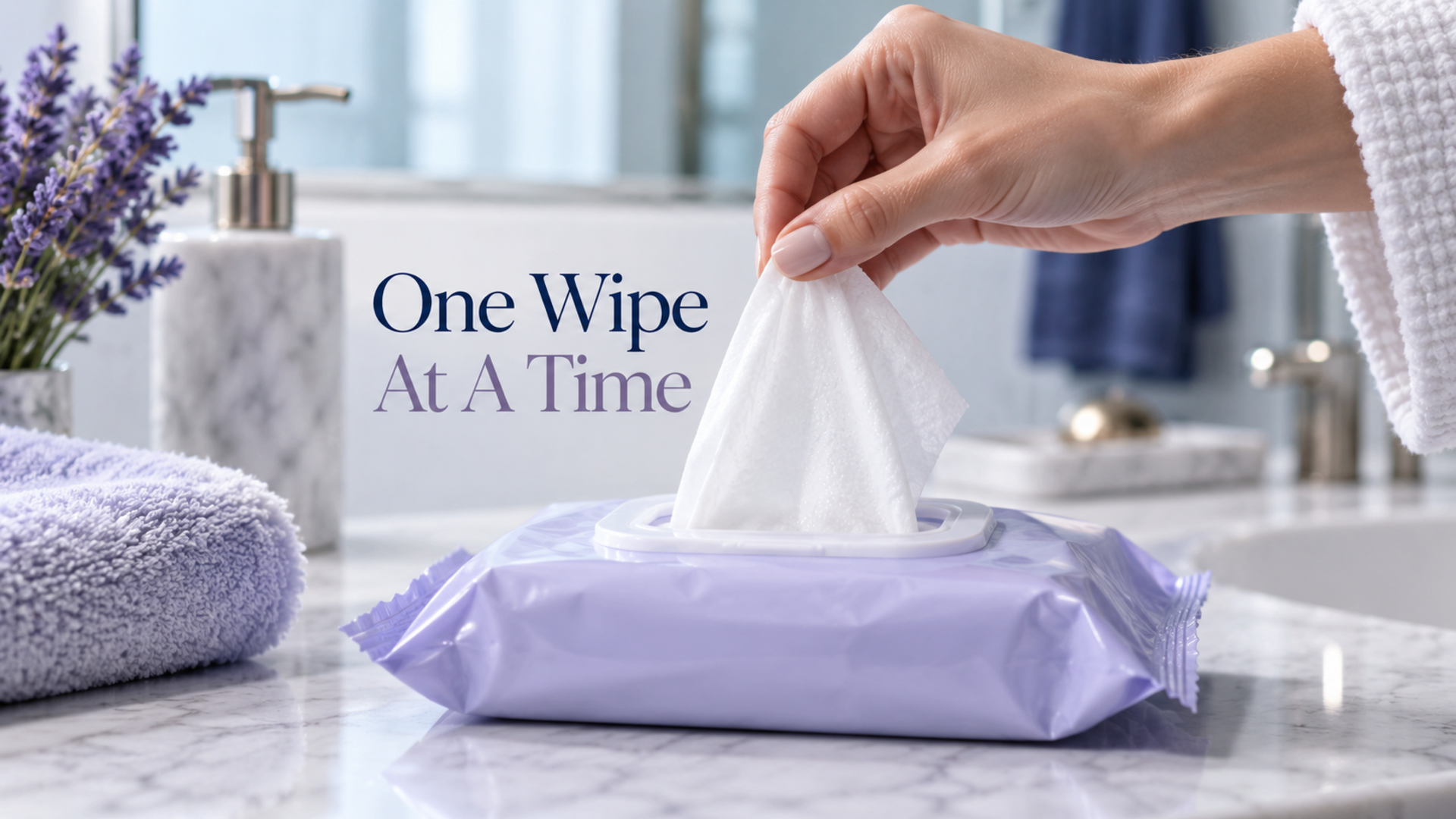
Ask reviewers to use the proposed pack in the way the product is intended to be handled. Observe the first opening, a sequence of pulls and the closing action. If one-handed use is part of the proposition, evaluate it explicitly rather than assume it from a flip-top design. Record the pack orientation and the conditions so the exercise can be repeated.
Look at the pack throughout its life
A full pack and an almost empty pack do not present the same physical situation. Include early, middle and later observations in the review, using a defined plan. Note whether sheets separate, whether the next sheet is accessible and whether the opening remains practical. These observations should help the development team identify a problem; they do not replace microbiological or stability evaluation.
Useful observation
Record how often extra sheets emerge and at which stage of pack use. A specific observation is easier to investigate than “the pack feels inconvenient.”
Closure is a functional feature
FDA advises consumers to keep wipe containers tightly closed to help prevent drying. FDA: Disposable Wipes, storage and closure guidance For development, that makes the act of closing worth observing. Check whether users can recognise that the pack is closed and whether the closure still works during the intended opening cycle. A larger lid is not automatically better, and a resealable label should be assessed in the actual packaging structure.
Specify the result before changing the mechanism
If a sample dispenses poorly, changing the opening alone may not answer the problem. The development team can investigate the interaction of sheet format, folding, stack and packaging under controlled conditions.
Change one factor at a time where practical, and retain the comparison record. The buyer’s role is to define the experience that needs improvement and the circumstances in which it occurs. That produces a stronger brief than asking for a more premium pack without explaining what should become easier.
Treat dispensing and closing as product functions, and evaluate the entire pack rather than a single pull.
Discuss your product briefProduct-development guidance. Evaluation methods and acceptance criteria should be defined for the exact product, intended use and destination market.