
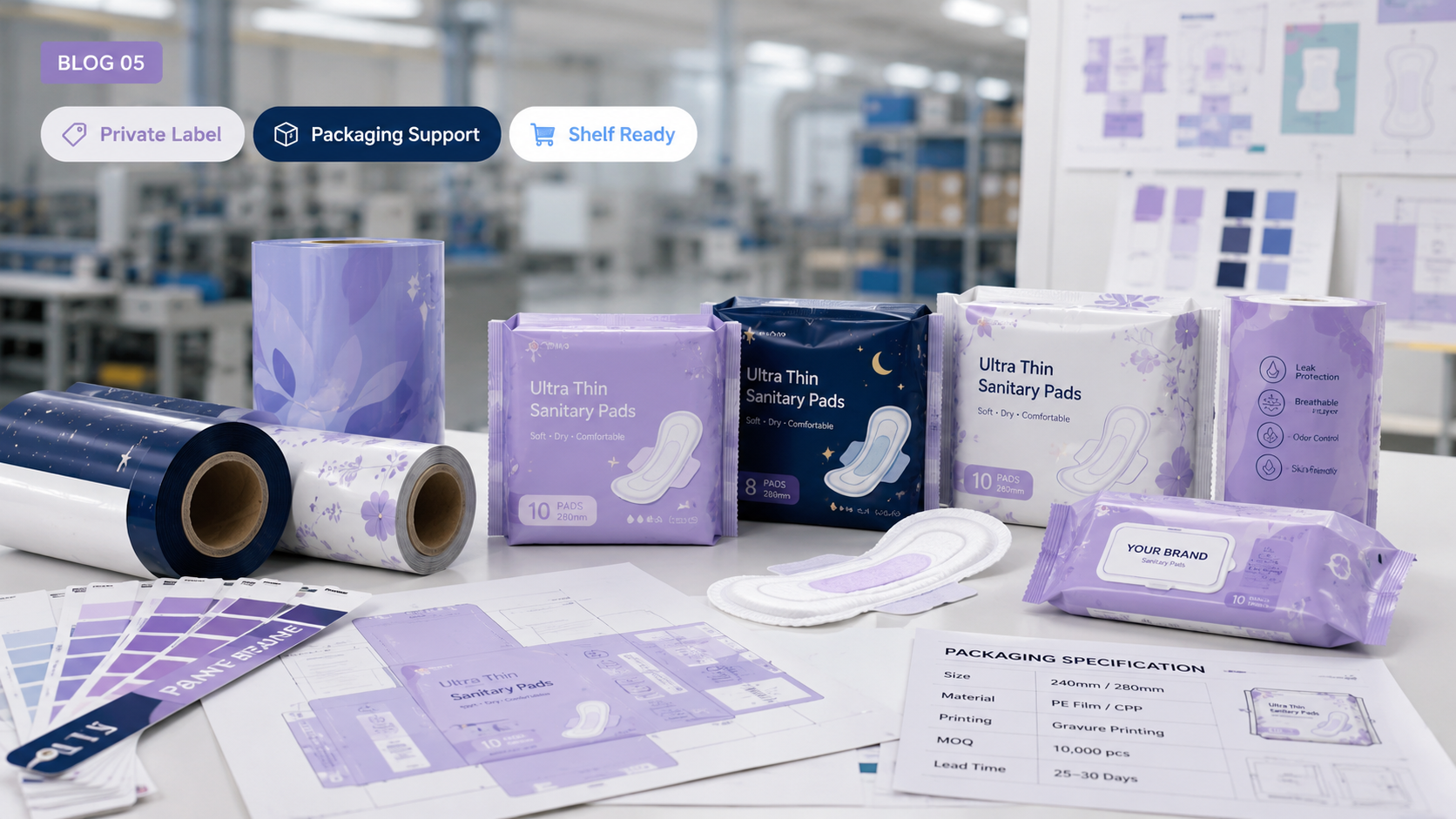
How Packaging Supports Private Label Sanitary Pad Projects
In private label sanitary pad projects, packaging is often the first thing a buyer or consumer notices. It helps define the product’s market position, supports communication on shelf or online, and connects the product to the buyer’s brand image. For this reason, packaging should be treated as an important part of the OEM project, not as a last-minute design step.
A well-made sanitary pad product can still appear weak in the market if the packaging feels unclear, inconsistent, or unprofessional. That is why packaging support matters for brand owners, importers, and distributors building private label feminine care lines.
Packaging Is More Than Appearance
Many people think of packaging only as color and graphics. In reality, it also includes format, material, size, product information, print clarity, sealing, and retail practicality. All of these details influence how the product is understood and accepted in the market.
For example, the package should reflect the target positioning. A value product, a premium product, and a night-use product may all need different packaging direction even if they are manufactured in the same factory.
What Private Label Buyers Should Confirm
Before production begins, buyers should confirm not only the visual design, but also the practical production details. This helps avoid delays and mistakes during packaging preparation.
- Pack size and quantity per pack
- Outer package material and finish
- Individual wrapping requirements
- Barcode, label, and product information placement
- Carton packing arrangement for shipment
How Packaging Supports Market Readiness
Packaging plays a direct role in market readiness. A strong pack can help consumers understand the product quickly, while a weak pack can make a product look unclear or low-trust. For distributors and retailers, packaging also affects shelf organization and brand recognition.
In e-commerce, packaging has another role: it becomes part of the product image. Online buyers cannot touch the product first, so the package often carries more of the communication burden.
Why OEM Support Matters
Private label buyers do not always need only a factory that can print packaging. They also need a team that can help coordinate packaging details in a production-friendly way. This includes confirming dimensions, checking files, aligning product and pack information, and making sure the final result matches the intended brand direction.
Good OEM packaging support reduces confusion between design concept and actual production output.
How Injeolly Supports Packaging Projects
Injeolly supports private label hygiene product projects with practical packaging coordination. This helps buyers move from product idea to production more smoothly, especially when they need custom packaging for sanitary pads and related feminine care products.
For buyers working across different channels and target markets, this kind of packaging support can make the project more efficient and more retail-ready.
Final Thoughts
Packaging helps shape product value, buyer confidence, and market presentation. In sanitary pad OEM projects, it should be planned with the same care as the product itself. Buyers who take packaging seriously are more likely to build a stronger private label product line from the start.
Injeolly welcomes discussions with private label buyers looking for practical support in product packaging, customization, and feminine care OEM cooperation.