
Industry Insights / INJEOLLY JOURNAL
Two disposable underpads can have the same outside dimensions and still present different usable absorbent areas. For a buyer comparing quotations, that distinction is easy to miss when every product is reduced to a size, a weight and a price.
Measure the area that matters
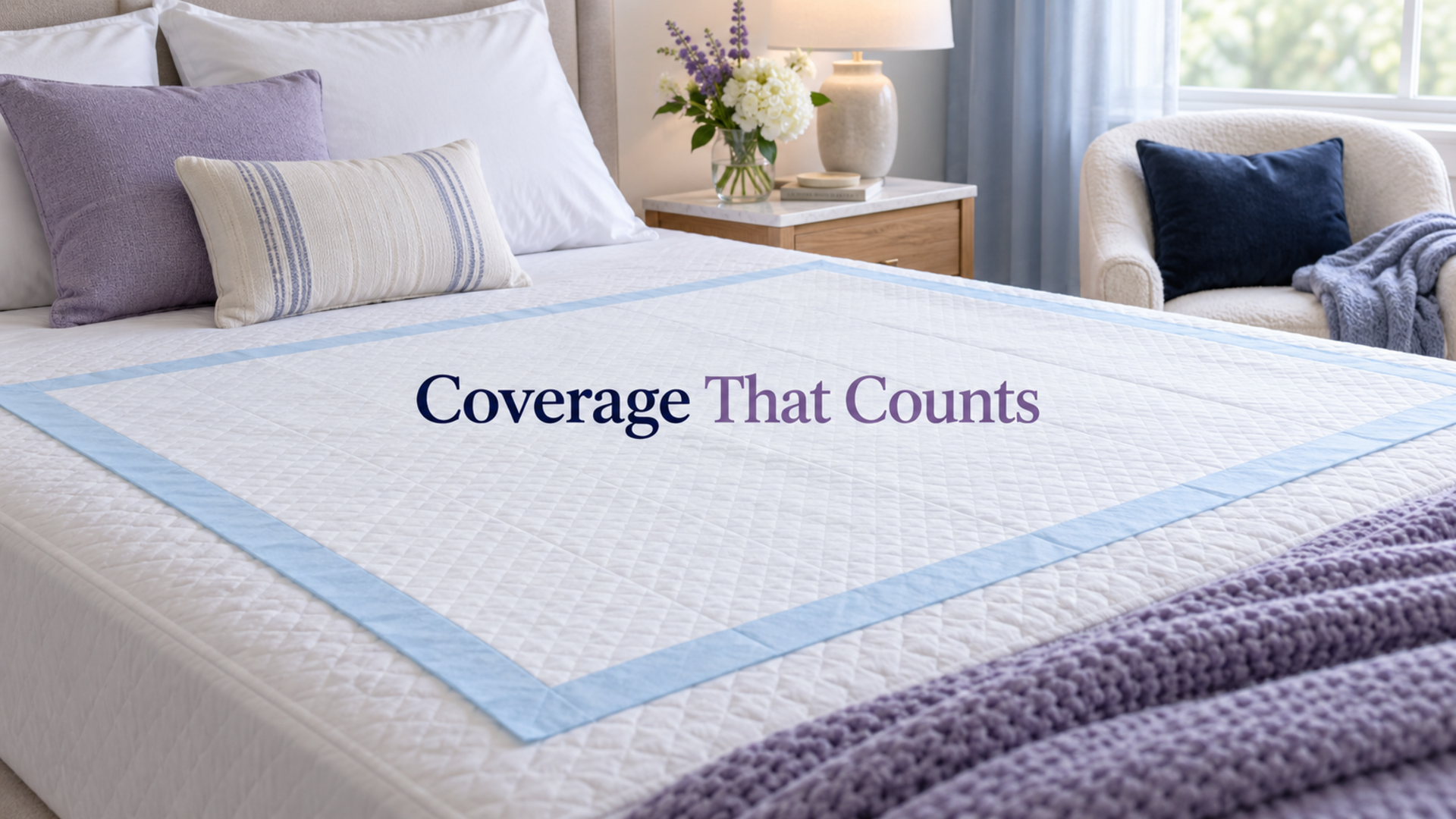
Ask the supplier to distinguish the outside dimensions from the absorbent-core dimensions. A sealed border is part of the product, but it should not be silently counted as equivalent to the absorbent zone. A simple specification drawing can make the distinction visible. Keep the measurement method and tolerances with the drawing so later samples are assessed consistently.
Define the intended surface
A bed, a chair and a temporary changing surface are different settings. The brief should identify which one the product is intended to serve and how it is placed. A larger outline does not automatically solve movement or positioning concerns. During evaluation, observe whether the pad remains appropriately positioned under the defined conditions and whether the proposed instructions are understandable.
Specification note
Record outer size and absorbent-zone size separately. Neither measurement alone establishes leakage protection.
Do not buy by total weight alone
Weight can be a useful manufacturing parameter, but it does not explain the whole construction. Ask what the quotation specifies and how the finished underpad will be assessed. Absorption and structural integrity are among the broader testing areas described by SGS for hygiene products. The relevant method and acceptance criteria should be agreed for the intended underpad, rather than inferred from a product photograph. SGS: adult care and underpad evaluation
Check the experience after use and in distribution
A review can include unfolding, placement, handling after the defined evaluation and the way the pack is opened and stored. Consider who performs each action: an individual user, a family member or a care worker.
These observations may reveal a mismatch that a dimensional comparison misses. For a commercial launch, retain the approved sample and the exact pack quantity alongside the technical specification. That makes a repeat-order discussion more precise than asking for the same size again.
Compare the usable zone, the intended setting and the finished-product evidence before comparing price.
Discuss your product briefProduct-development guidance. Evaluation methods and acceptance criteria should be defined for the exact product, intended use and destination market.