
Industry Insights / INJEOLLY JOURNAL
A pantyliner can look like a small sanitary pad, but a useful range brief should not begin by shrinking a different product. It should begin with the occasion the brand intends to serve and the information a shopper needs to choose it.
Define the intended role
Write a short description of the intended everyday use before choosing dimensions or pack quantity. Avoid a brief that combines daily freshness, menstrual protection and bladder-leak protection without distinguishing them. If the project includes more than one need, separate the product concepts and have their requirements reviewed. A precise intended use makes sample evaluation and consumer communication more coherent.
Make the range differences visible
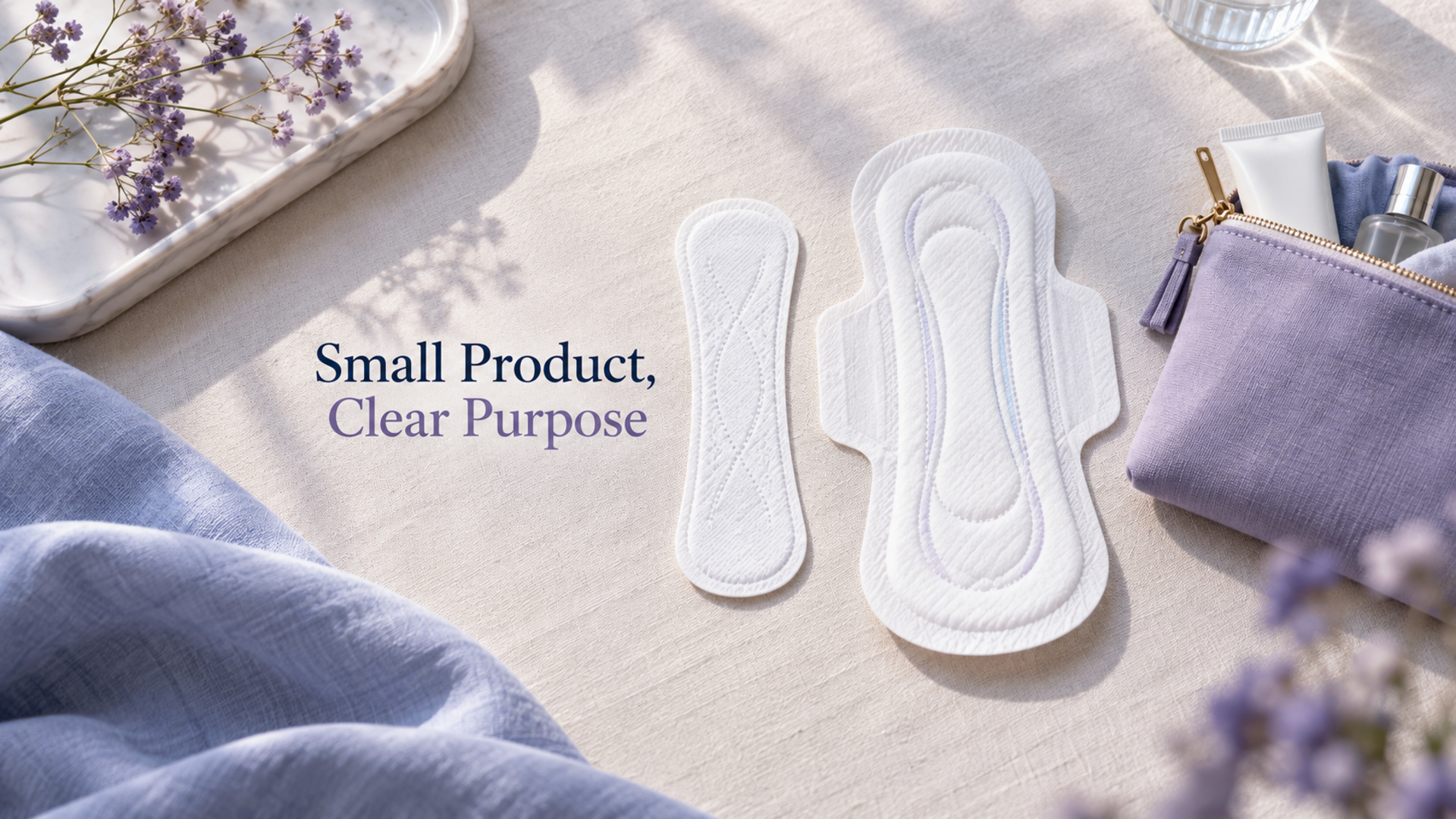
A hypothetical two-product range might distinguish a compact format for a small pouch from a longer format intended to provide more coverage. That distinction still requires actual dimensions, an approved construction and appropriate evaluation. It should not imply that length alone determines protection. The pack can help by using consistent naming and an understandable visual size comparison rather than several near-identical product names.
Claim boundary
Do not use an everyday pantyliner description to imply that the product has been validated for urinary incontinence or every level of menstrual flow.
Review the complete wearing proposition
For development, consider the shape, flexibility, fastening and the way the product is presented to the user. These are useful evaluation questions, not promises that a particular design will work for everyone. SGS includes closure performance and structural integrity within its broader hygiene-product testing work. The relevant assessment plan should be chosen for the particular liner and intended use. SGS: functional evaluations for hygiene products
Packaging should answer the first questions
A buyer can review whether the pack clearly identifies the product, its quantity and the distinction from other items in the range. Individually wrapped and multi-product formats may suit different channels; neither format should be labelled universally better.
Test whether someone unfamiliar with the range can choose the intended item without a salesperson explaining it. If the product’s role remains unclear, adding a longer list of claims is unlikely to solve the problem. Clarify the range structure before expanding it.
Give each liner a defined purpose, an understandable distinction and evidence appropriate to its intended use.
Discuss your product briefProduct-development guidance. Evaluation methods and acceptance criteria should be defined for the exact product, intended use and destination market.