
Industry Insights / INJEOLLY JOURNAL
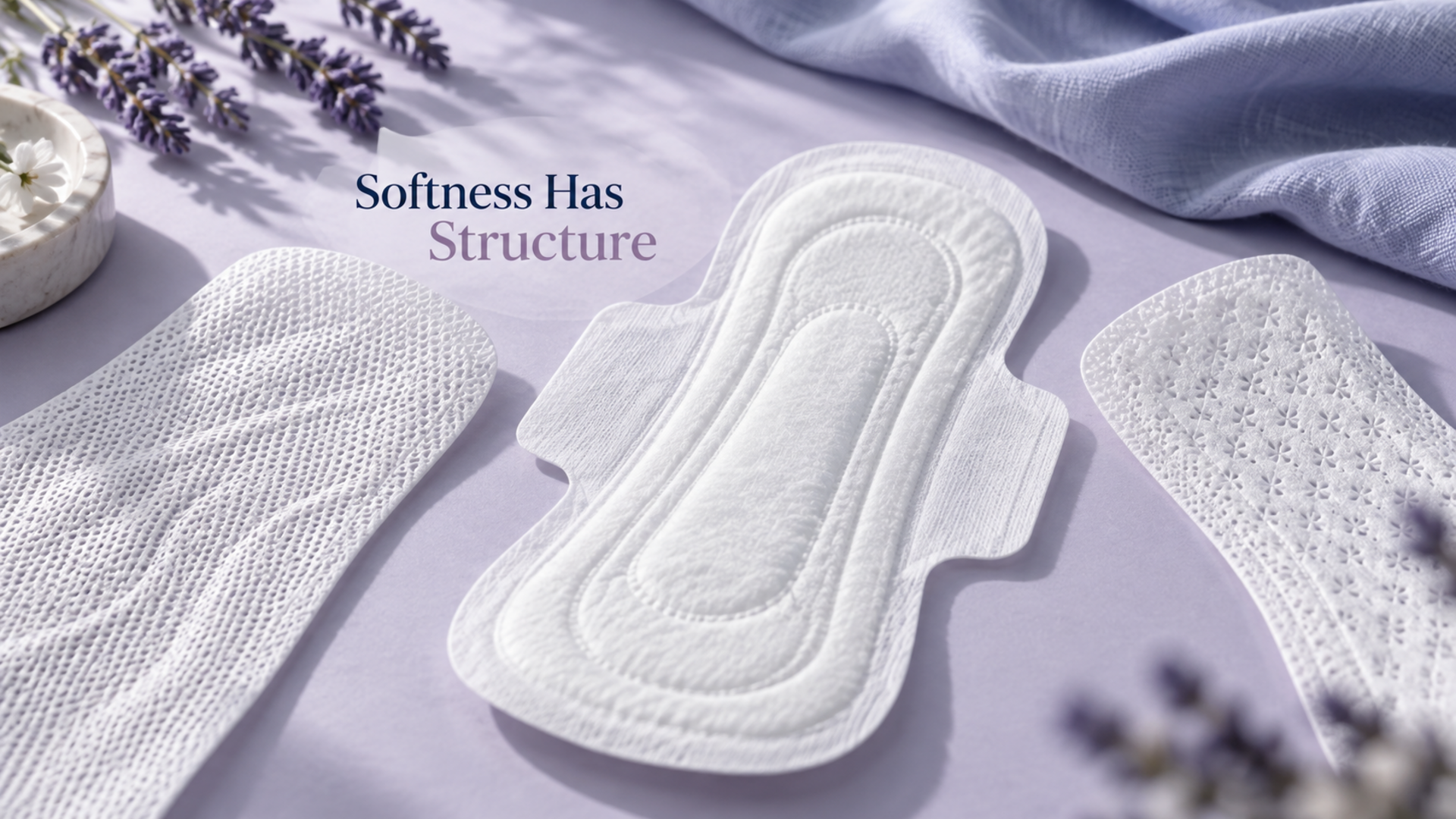
Two sanitary pad samples can both be described as soft and still feel noticeably different. One may be smooth, another more cushioned, and a third more textured. For a private label project, the task is to turn that preference into something a development team can reproduce.
Describe the sensation before selecting the wording
Begin with side-by-side samples and a short vocabulary: smooth, textured, flexible, lofty or firm. Ask reviewers to describe the surface rather than simply rank it. A shared reference sample helps, especially when commercial and technical teams work in different languages. Record whether the assessment concerns an unused dry sample or a defined use evaluation; the context should travel with the result.
Keep material identity separate from hand feel
A cotton-like feel is not a declaration of cotton content. Likewise, an embossed appearance does not by itself establish a performance benefit. The specification should identify the actual material and construction, while the marketing description should remain within what can be supported. EDANA describes nonwovens as contributing several functions in absorbent hygiene products, including softness, strength and protection. A useful brief therefore considers more than a single tactile impression. EDANA: nonwovens in absorbent hygiene products
Buyer note
“Cotton-like,” “cotton-containing” and “100% cotton topsheet” are different statements. Use only the wording supported by the actual construction.
Evaluate the surface inside the complete product
A material swatch is useful for initial comparison, but the consumer uses the assembled pad. For the sample review, keep the rest of the construction as consistent as practical and ask the laboratory which finished-product evaluations are relevant. Otherwise a change in the core, bonding or overall structure may be mistaken for a topsheet improvement. Document the sample version so a favourable response can be traced to the product that produced it.
Make the approval reproducible
The final record can combine the agreed material description, a retained reference sample and a small number of acceptance criteria. If a supplier proposes a replacement, compare it with that reference under the same conditions.
This does not require turning every sensory preference into a dramatic front-of-pack promise. It creates a better basis for choosing between samples and maintaining consistency across repeat orders. The most useful outcome is a product team that can explain exactly what was approved.
Define the sensation, identify the material and approve the finished product against a retained reference.
Discuss your product briefProduct-development guidance. Evaluation methods and acceptance criteria should be defined for the exact product, intended use and destination market.