
Industry Insights / INJEOLLY JOURNAL
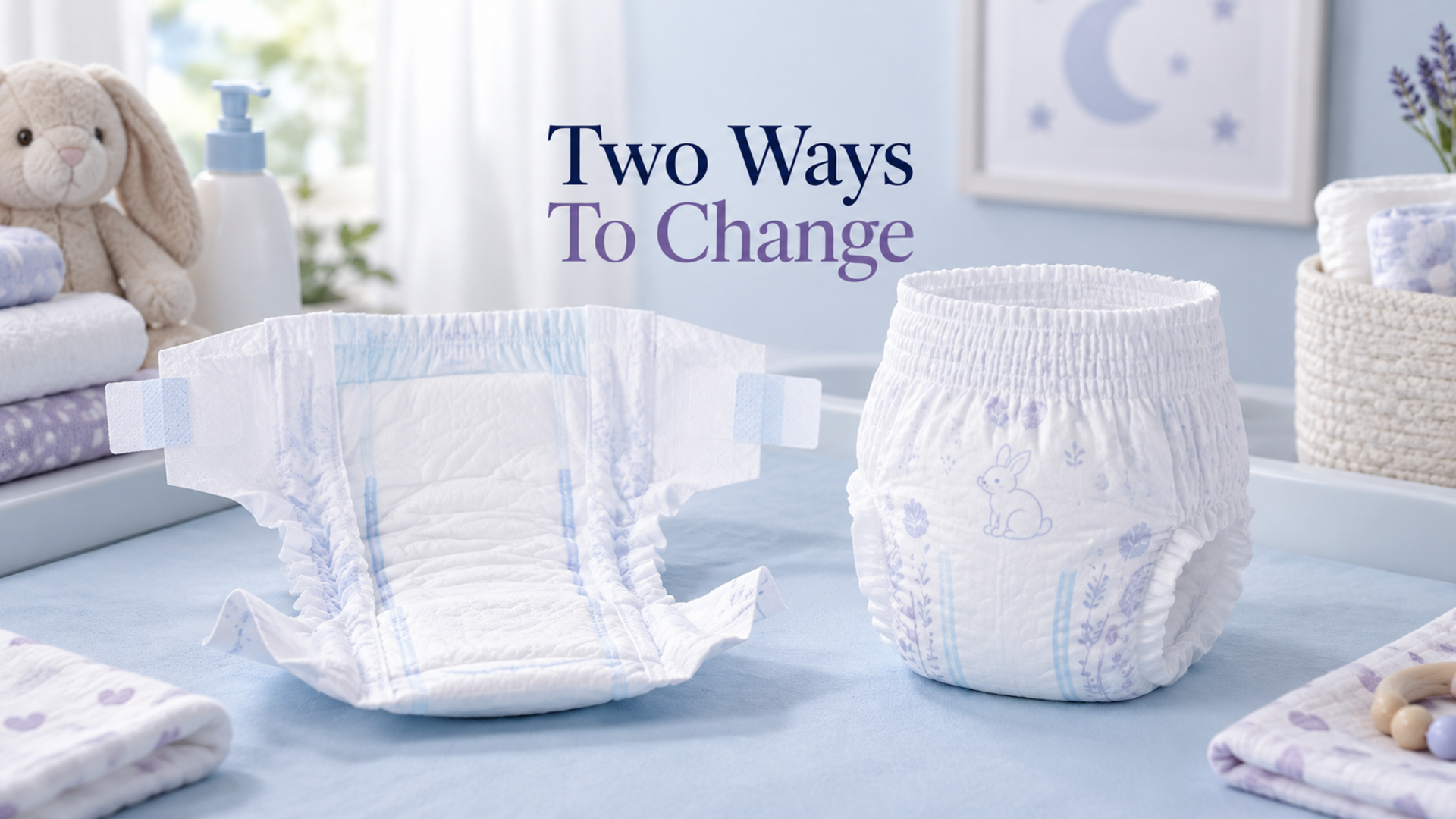
Tape diapers and pull-on pants give caregivers different ways to change a baby. Treating one as a universal upgrade over the other can hide the real decision: which changing routine is the product intended to support?
01Start with the action
A tape-style format is opened and secured around the wearer. A pull-on format is drawn on like underwear, with removal features depending on the design. A useful sample review observes those actions rather than relying only on a flat product photograph. Ask whether the intended caregiver can identify the front and back, understand the fastening or removal method, and handle the product as directed.
02Size names are only the beginning
A size label should connect to an actual specification and the brand’s validated guidance. Do not assume that two products marked with the same letter have the same fit. For a development comparison, retain the dimensions and construction details of each sample and evaluate the intended size range appropriately. The question is not whether a label looks familiar, but whether it helps the purchaser choose the right product.
Range note
A different changing format is a reason to reassess the whole product. It is not evidence of better performance by itself.
03Check the format and the protection together
Fastening, structural integrity and liquid handling are separate areas to consider in a product brief. SGS identifies closure systems and absorption-related performance among hygiene-product evaluation areas. A change of format should therefore be reviewed as a product change, rather than assumed to preserve every characteristic of an existing tape diaper. SGS: baby hygiene product evaluation
04Use careful category language
“Pull-on diaper pants” and “training pants” can suggest different intended roles to shoppers. The name should match the actual product and its supported use. Avoid an unsupported claim that a format accelerates toilet learning or suits every child at a particular age.
A clearer range explains how the product is used and how it differs from the adjacent SKU. This helps distributors present the assortment and gives caregivers a more useful basis for choice. Any expansion should solve a distinct routine, rather than add another label to a crowded shelf.
Select the format around the changing routine, then validate fit, handling and protection as one product.
Discuss your product briefProduct-development guidance. Evaluation methods and acceptance criteria should be defined for the exact product, intended use and destination market.