
Environmental claims in feminine care are moving into an evidence-first phase. A natural-looking pack may create the right first impression, but the words printed on it still need to match the product’s materials, supporting records and actual performance.
Two recent developments make this shift easier to see. The current EU Ecolabel criteria for absorbent hygiene products extend well beyond visual ideas of “green” packaging. They address fibre sourcing, restricted substances, manufacturing and packaging requirements, disposal information, and the fitness for use of the finished product.
In the UK, a public dispute over period-care claims brought similar questions into view. In June 2025, The Guardian reported that Here We Flo would remove terms including “plastic-free” and “biodegradable” from pad and liner packaging. The company described the change as part of a planned packaging refresh and disputed the allegations made by a competitor. This was not presented as a final regulatory ruling, but it highlighted a practical issue: once a broad environmental claim reaches the pack, its scope and evidence may be examined in public.
A material story is not yet a product claim
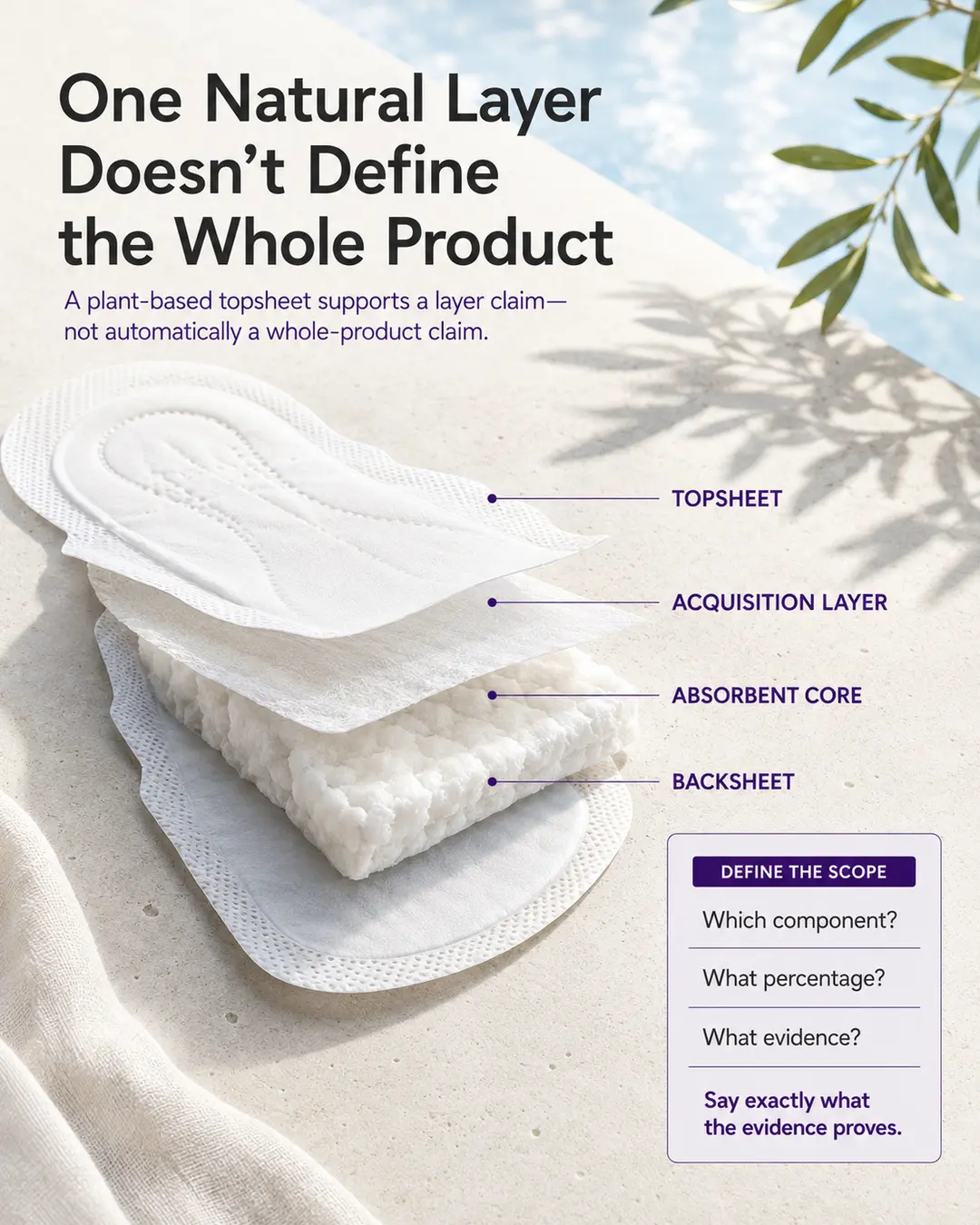
A sanitary pad is a layered product. Its topsheet, acquisition layer, absorbent core, backsheet, adhesives, release paper, wrapper and sales packaging may come from different material families and different suppliers. A verified attribute in one layer does not automatically describe the entire pad.
For example, a plant-derived or biobased component may support a carefully limited statement about that component. It does not, by itself, prove that the whole product is plant-based, plastic-free or biodegradable. The same distinction applies when a test report covers a raw material rather than the finished product.
The first question is not “Is this sustainable?”
It is: Which component does the statement describe, what proportion does it represent, and what evidence supports that exact wording?
The wording has to follow the evidence
This principle is visible inside the EU Ecolabel criteria themselves. For biobased plastics, the criteria call for traceable sourcing and an exact, measurable statement of the biobased share of the plastic contained in the relevant product, component or packaging. They do not treat broad words such as “biobased,” “plant-based” or “natural-based” as substitutes for a defined percentage.
UK advertising guidance follows a similar logic at the communication level. ASA/CAP guidance on general environmental claims says that broad claims normally need evidence relating to the full life cycle unless the communication clearly limits the claim. If the evidence relates only to a component or one stage, the wording should be qualified accordingly.
“Biodegradable” needs another layer of precision. Evidence should identify what was tested, the method used, the conditions and time frame, and whether those conditions reflect the product’s likely end-of-life route. A material-level result cannot silently become a whole-product promise.
A practical evidence chain
- Map the construction. Record every layer, separate component and relevant item of packaging instead of describing the pad as one undivided material.
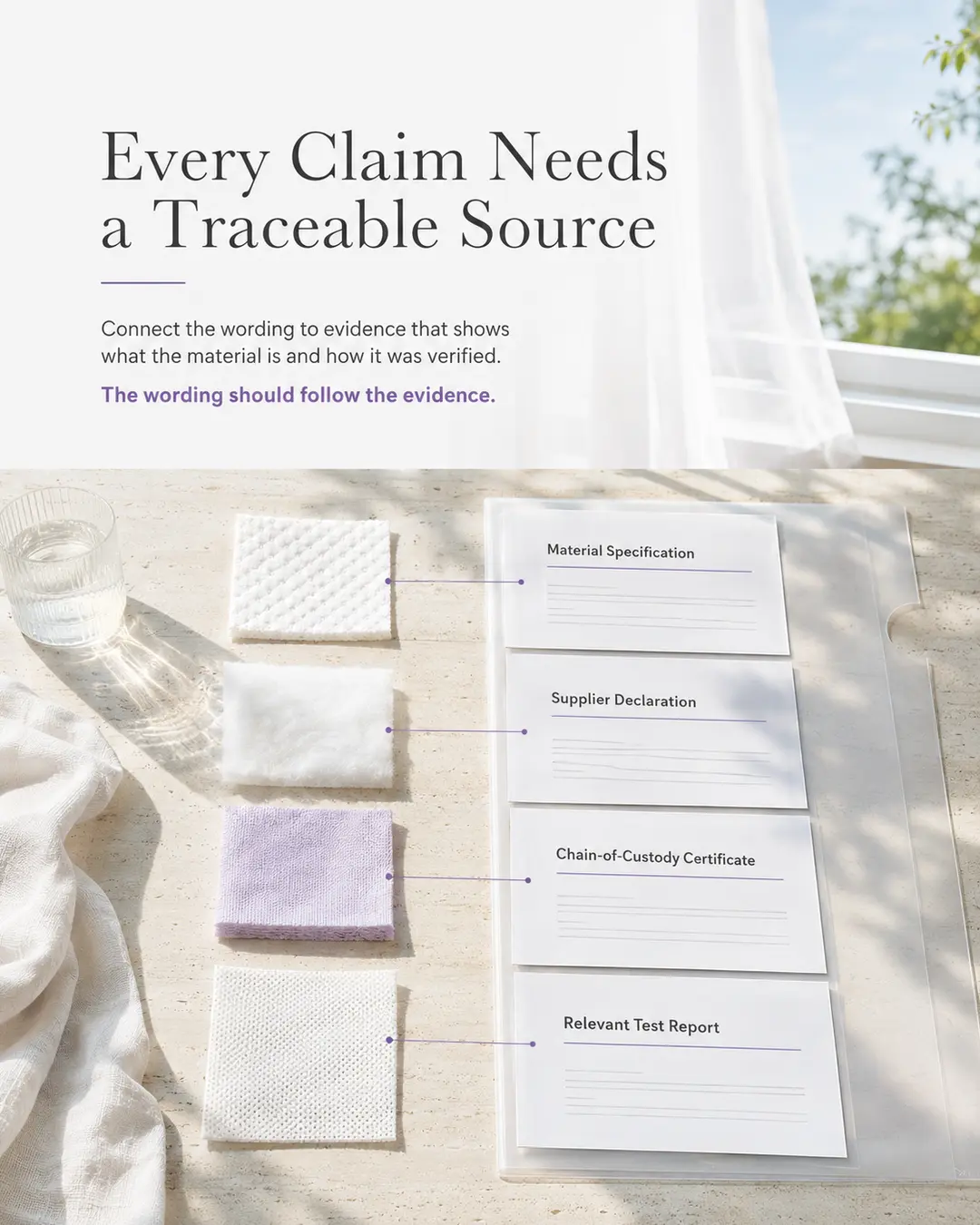
- Identify the evidence owner. Link each proposed statement to a material specification, supplier declaration, chain-of-custody record or other appropriate supporting document.
- Check the test boundary. Confirm whether a report covers a fibre, a nonwoven, a film, a component or the finished product—and whether the method supports the proposed claim.
- Write within the proven scope. Use the narrowest accurate wording when whole-product evidence is not available.
- Keep records connected to the final specification. A supplier or material change can alter the evidence behind packaging that has already been approved.
Environmental positioning cannot replace product performance
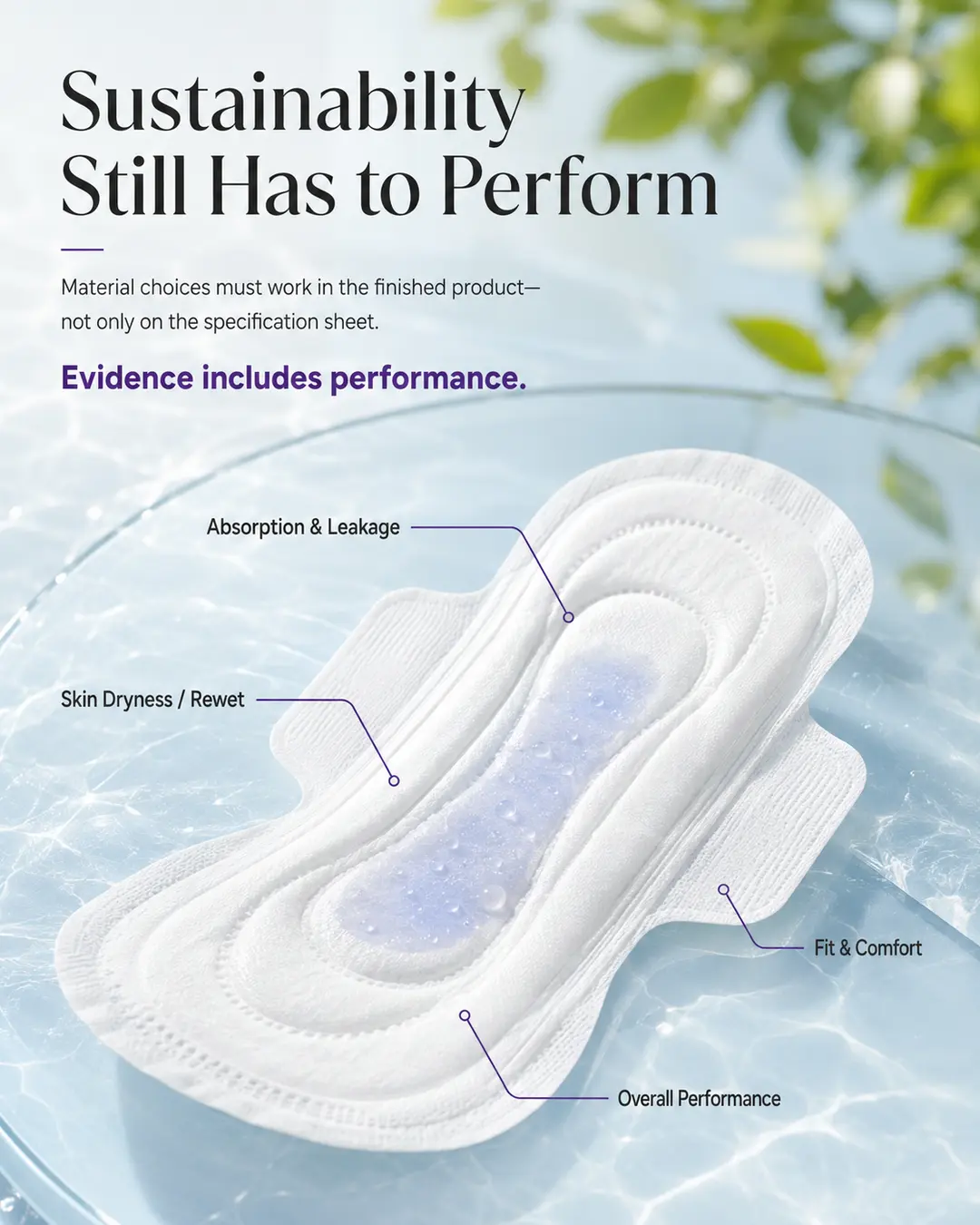
Material changes can affect more than the environmental story. A different topsheet may change fluid acquisition or skin feel. Adjustments to the core can affect absorption rate and leakage protection. A different backsheet or adhesive system may influence fit, comfort and structural stability.
The EU Ecolabel criteria therefore include both in-use and technical evaluation of feminine care pads. The stated areas include absorption and leakage protection, skin dryness, fit and comfort, and overall performance. The criteria also require reports that explain the methods, results and data used.
This is an important correction to a common development sequence. The work is not finished when a preferred material has been selected and documented. The finished pad still has to show that the environmental choice performs inside the full construction.
Review the claim before artwork approval
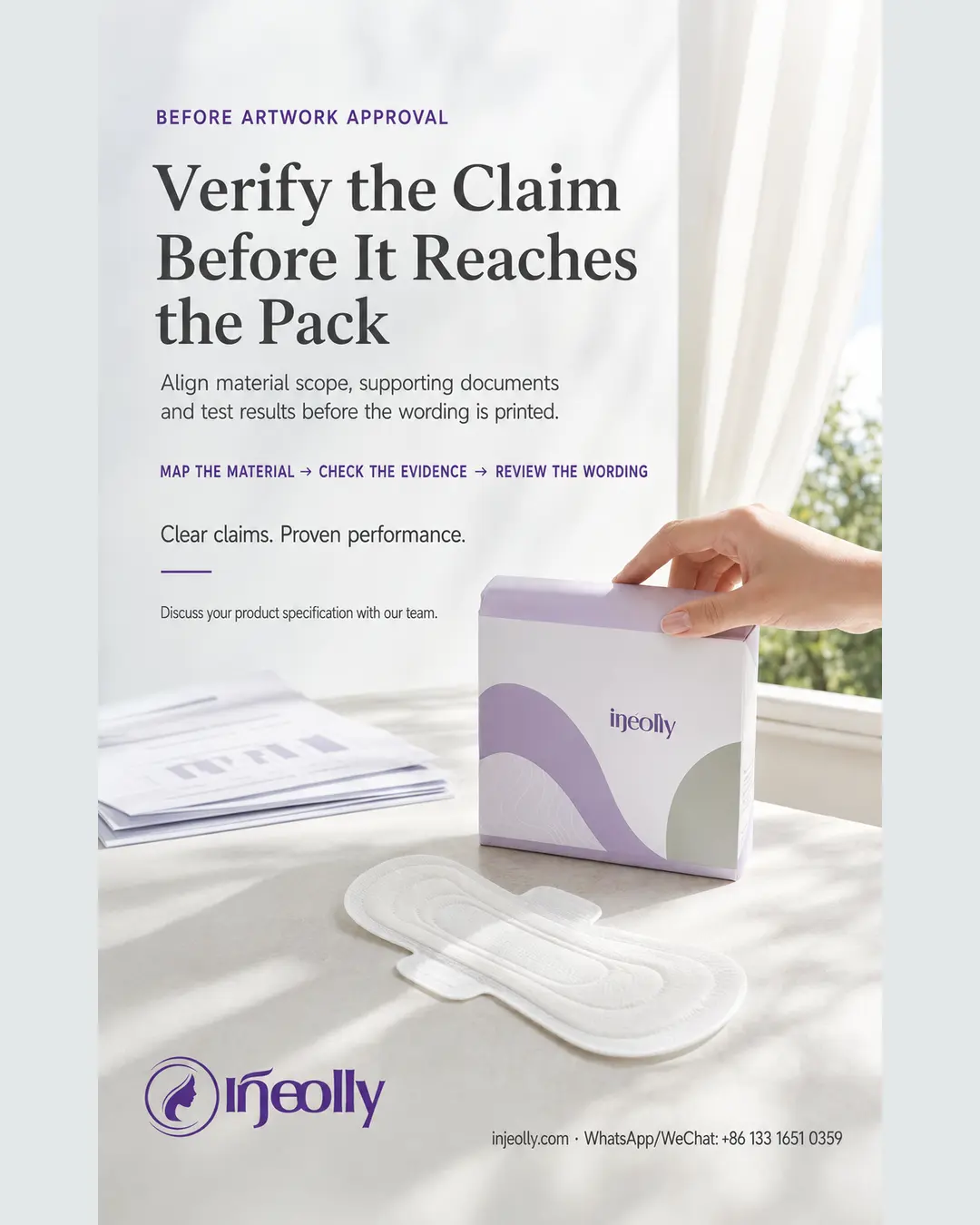
Packaging review is often treated as a final design check. For environmental wording, that is too late. The claim should be reviewed while the product specification is still being finalised, because a change in wording may reveal a gap in the documentation—or a need to narrow the scope.
| Review point | Question before printing |
|---|---|
| Material scope | Does the statement refer to one component, a percentage, the full pad or its packaging? |
| Documentation | Can the exact wording be traced to current supplier records and specifications? |
| Test applicability | Was the relevant material or finished product tested under conditions that support the claim? |
| Performance | Does the final construction still meet the required absorption, dryness, fit and comfort targets? |
| Artwork consistency | Do the front panel, back panel, icons and disposal instructions tell the same accurate story? |
From green impression to verifiable communication
The stronger approach is not to avoid environmental communication. It is to make each statement proportionate to the evidence behind it. Specific, qualified wording may appear less dramatic than a broad promise, but it is easier to verify, easier to maintain when a specification changes, and less likely to create a gap between packaging and product reality.
For a new feminine care concept, claim review should therefore begin with the material map—not after the packaging design has been completed. When material scope, documentation, test conditions and final-product performance remain connected, sustainability becomes more than a visual story. It becomes a product statement that can be explained.
Clear claims. Proven performance.
If your next product specification includes plant-based, biobased, plastic-free or biodegradable positioning, align the evidence and claim boundary before the wording reaches the pack.
This article provides general product-development and communication information, not legal advice. Requirements and accepted evidence should be checked for the intended market and the exact claim before publication.