
Industry Updates / INJEOLLY JOURNAL
Putting menstrual products within reach is valuable, but availability alone does not describe the full experience of using them at school. Education, privacy and disposal can determine whether a product is practically accessible when it is needed.
The evidence is broader than product provision
The WHO/UNICEF Joint Monitoring Programme’s 2024 school report found that 39% of schools globally provided menstrual health education and 31% had bins for menstrual waste in girls’ toilets. These are 2024 findings, not a new 2026 survey. They remain useful context for understanding why menstrual access discussions extend beyond the number of products supplied. UNICEF: WASH in schools report, 27 May 2024
An institutional channel has a different use environment
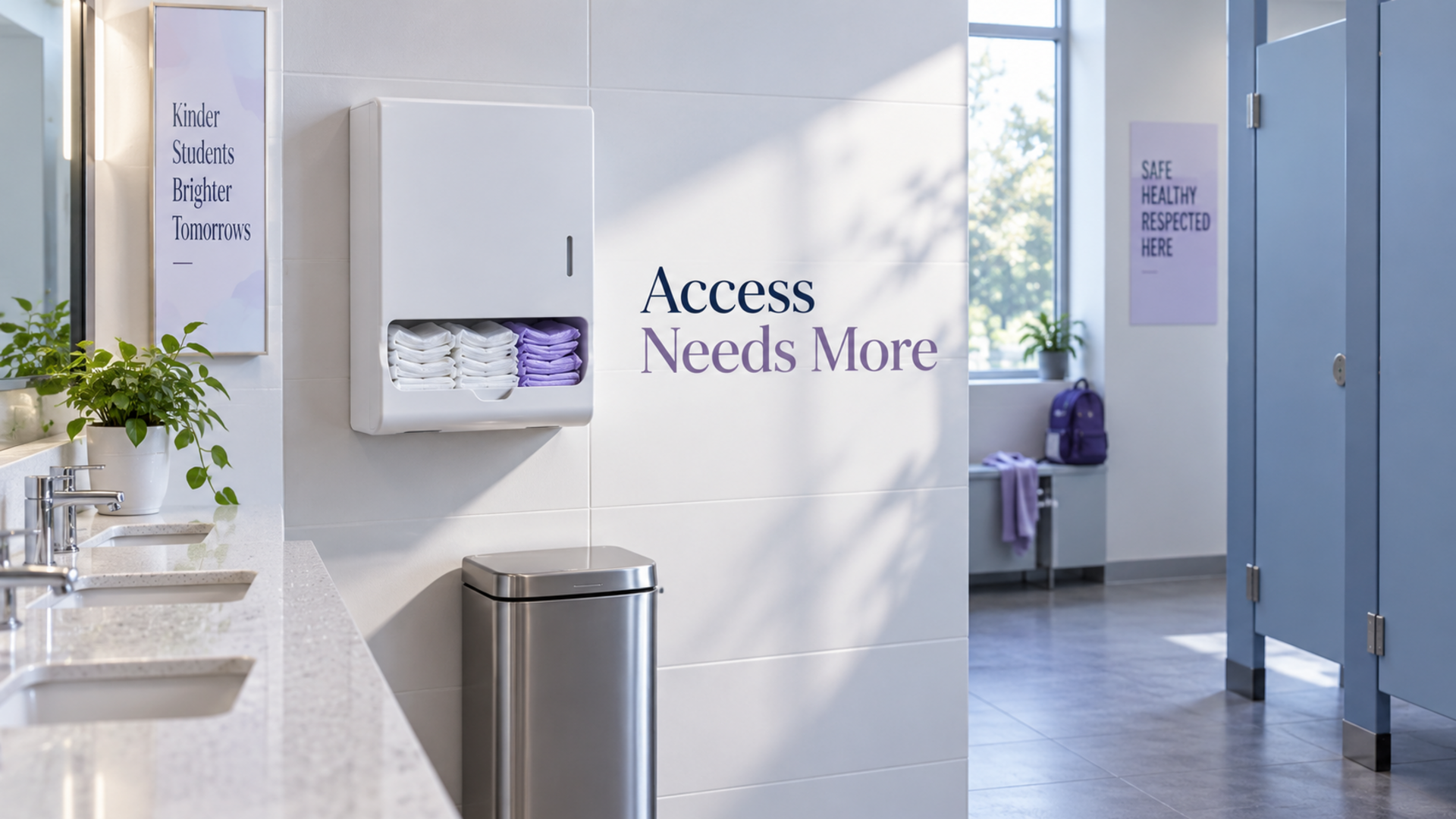
A school dispenser, a nurse’s office and a take-home pack create different product journeys. In our assessment, brands considering these channels should investigate how a product is stored, obtained and disposed of in each setting. A pack designed for a supermarket shelf may need a different outer format for an institutional restocking system. That is a channel-design consideration, rather than proof of a universal institutional specification.
Context, not a promise
Providing pads is one part of menstrual access. Do not attribute wider social outcomes to a product without appropriate evidence.
Clarity can reduce friction
Simple opening instructions and an understandable disposal message can help a first-time user. Individually protected products may also suit some dispensing arrangements, depending on the programme. The details should be developed with the organisation and its users. Product suppliers should avoid turning a provision programme into a claim that one material, shape or absorbency level suits every student.
The commercial signal is coordination
The report does not measure tender volumes or promise growth for private suppliers. Our interpretation is that it strengthens the case for coordination between product provision and facilities.
Organisations may need replenishment, stock visibility and a practical disposal route as much as a low unit price. A brand evaluating this channel can use a small programme to learn which information and pack formats work, while making no unsupported claim about attendance, health or educational outcomes.
Institutional menstrual care works best when the product fits the setting in which it will be accessed and used.
Discuss your product briefSource context checked on 9 September 2026. Market implications are editorial analysis; dates and regulatory scope should be rechecked before a later publication.