
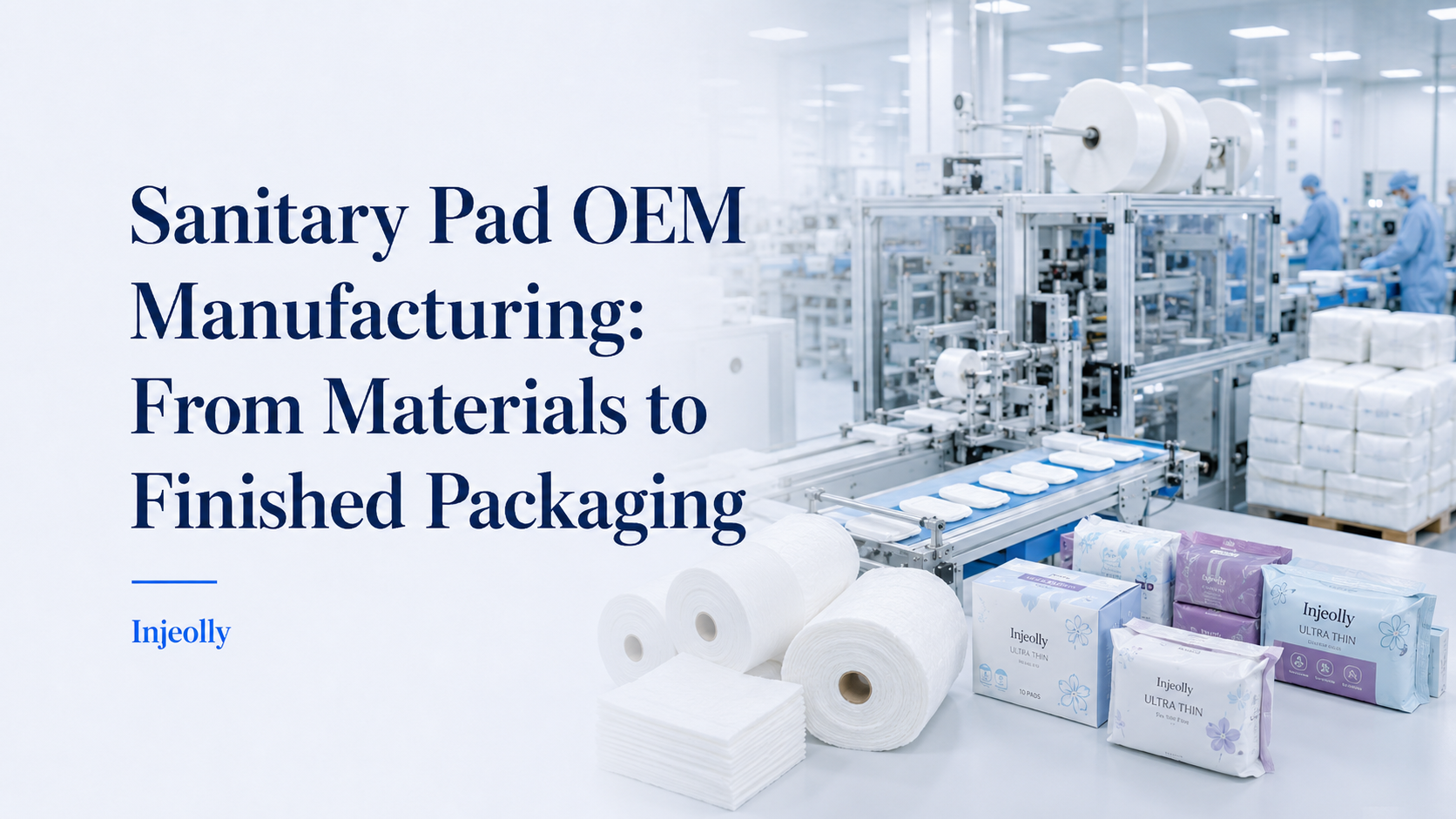
Sanitary Pad OEM Manufacturing: From Materials to Finished Packaging
Sanitary pad OEM manufacturing is a step-by-step process that connects material selection, product structure, production control, packaging customization, inspection, and shipment preparation. For private label buyers and distributors, understanding this process helps reduce communication mistakes and makes supplier evaluation more practical.
A good OEM project should not begin with price only. It should begin with a clear product target: who will use the product, where it will be sold, what level of comfort is expected, what packaging style is needed, and what order plan the buyer wants to build.
Step 1: Confirm the Product Direction
Before production begins, buyers need to confirm the basic product direction. This includes product type, length, thickness, absorbency level, surface material, wing design, individual wrapping, outer packaging, and quantity per pack. These choices should match the target market and sales channel.
For example, a product for supermarket distribution may need different packaging and shelf presentation from a product sold through online channels. A product for a value market may focus on price and basic function, while a premium product may require softer materials, stronger visual packaging, and more detailed product positioning.
Step 2: Select Materials and Product Structure
Material selection is one of the most important parts of sanitary pad OEM manufacturing. The top sheet, absorbent core, back sheet, adhesive, release paper, and packaging film all affect the final product experience. Buyers should not only ask what materials are used, but also understand why those materials are suitable for the target product.
The product structure should match the intended use. Day pads, night pads, panty liners, and maternity-related products may require different length, absorption, and shape design. A clear specification sheet helps both the buyer and the factory avoid confusion during sample confirmation and mass production.
Step 3: Prepare Samples and Packaging Files
Sample confirmation allows buyers to check product feel, size, structure, packaging direction, and overall presentation before placing a larger order. For private label projects, packaging files should also be prepared carefully. Artwork size, color, text, barcode, product information, and sealing position all need to be confirmed before mass printing.
This stage is where many sourcing mistakes happen. If product specifications and packaging details are not confirmed clearly, the final goods may not match the buyer’s expectations. A professional OEM factory should help buyers check these details before production starts.
Step 4: Manage Production and Process Control
During production, the factory should control material feeding, product forming, cutting, wrapping, sealing, packing, and carton preparation. Each stage affects the final product. For example, unstable sealing can affect package appearance, while inaccurate cutting can affect product consistency.
Process control is important because hygiene products are repeat-use consumer goods. Buyers need products that remain consistent across different batches, especially when they are building a private label brand.
Step 5: Inspect Finished Goods Before Shipment
Finished goods should be checked before shipment. Common inspection points include product appearance, package sealing, printing accuracy, carton labeling, quantity, and general consistency with approved samples. For export orders, packing details and shipping preparation should also be reviewed carefully.
Inspection does not remove every risk, but it helps reduce avoidable problems before goods leave the factory. It also gives buyers more confidence in repeat orders.
OEM Buyer Checklist
- Confirm product size, structure, and absorbency requirements.
- Review material options before sample production.
- Check private label packaging artwork carefully.
- Keep approved samples and specifications as reference.
- Confirm inspection and packing details before shipment.
How Injeolly Supports Sanitary Pad OEM Projects
Injeolly supports sanitary pad OEM manufacturing for private label buyers, distributors, and importers. The team can assist with product selection, sample preparation, packaging customization, production coordination, and export order follow-up. This helps buyers manage the project from early product planning to finished goods shipment.
For buyers developing feminine care product lines, a clear OEM process makes communication easier and reduces unnecessary risks during production.
Final Thoughts
Sanitary pad OEM manufacturing is not only about producing a finished product. It is about building a controlled process from materials to packaging. Buyers who understand this process can communicate more clearly with factories, make better product decisions, and develop more stable private label projects.
Injeolly provides OEM manufacturing support for sanitary pads and related hygiene products, helping buyers turn product ideas into practical production plans.