
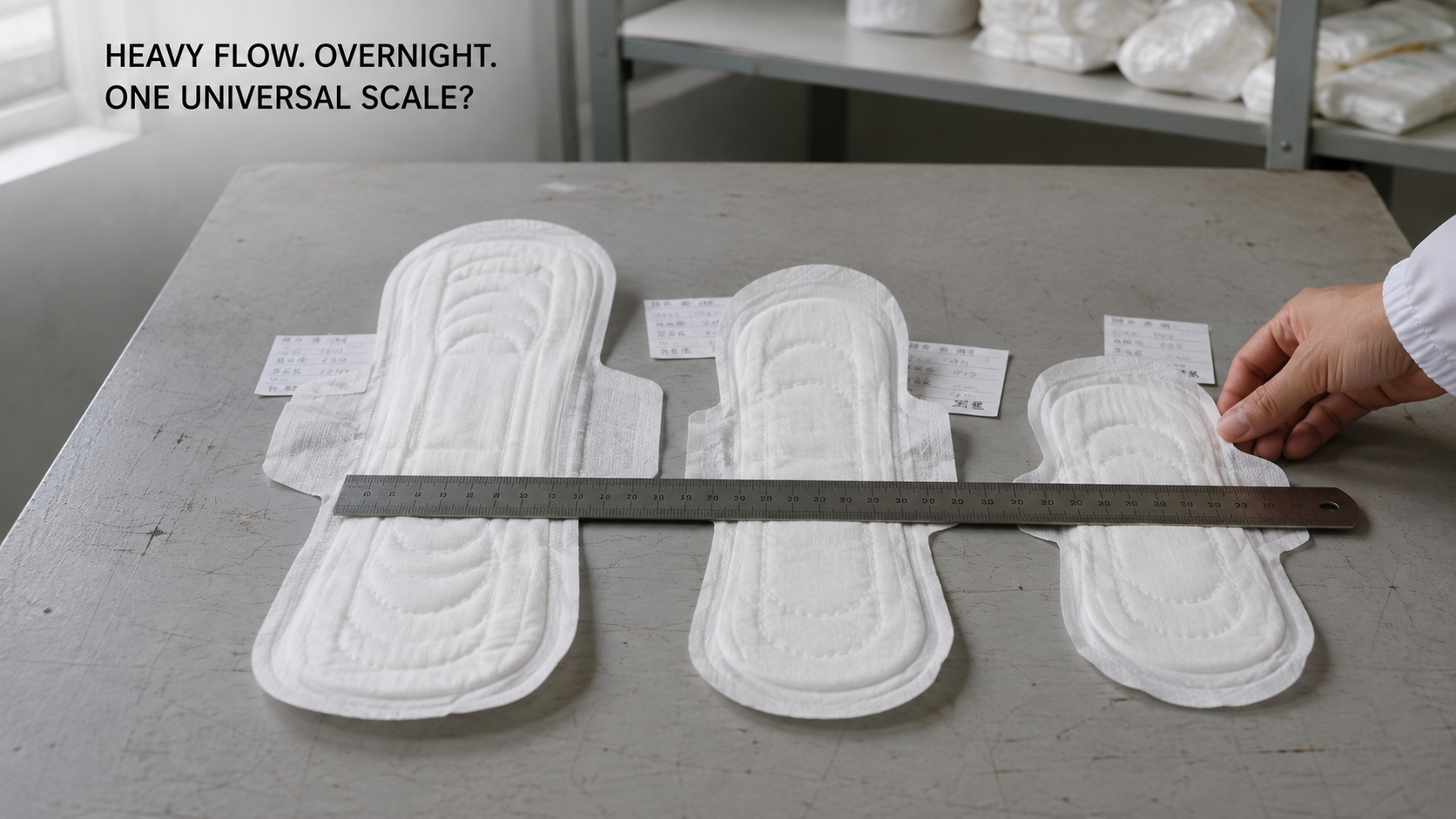
One sanitary pad pack says Heavy Flow. Another says Overnight. A third uses drops, numbers or words such as Super and Extra. The shelf can look as if every label belongs to one shared measurement system—but it usually does not.
For sanitary pads, there is no single global, cross-brand scale that converts “heavy flow” or “overnight” into a fixed absorbency band. These terms are generally used to organise a brand’s own range or communicate an intended use occasion. Product standards and performance tests still matter, but they do a different job: they evaluate a defined product under defined conditions.
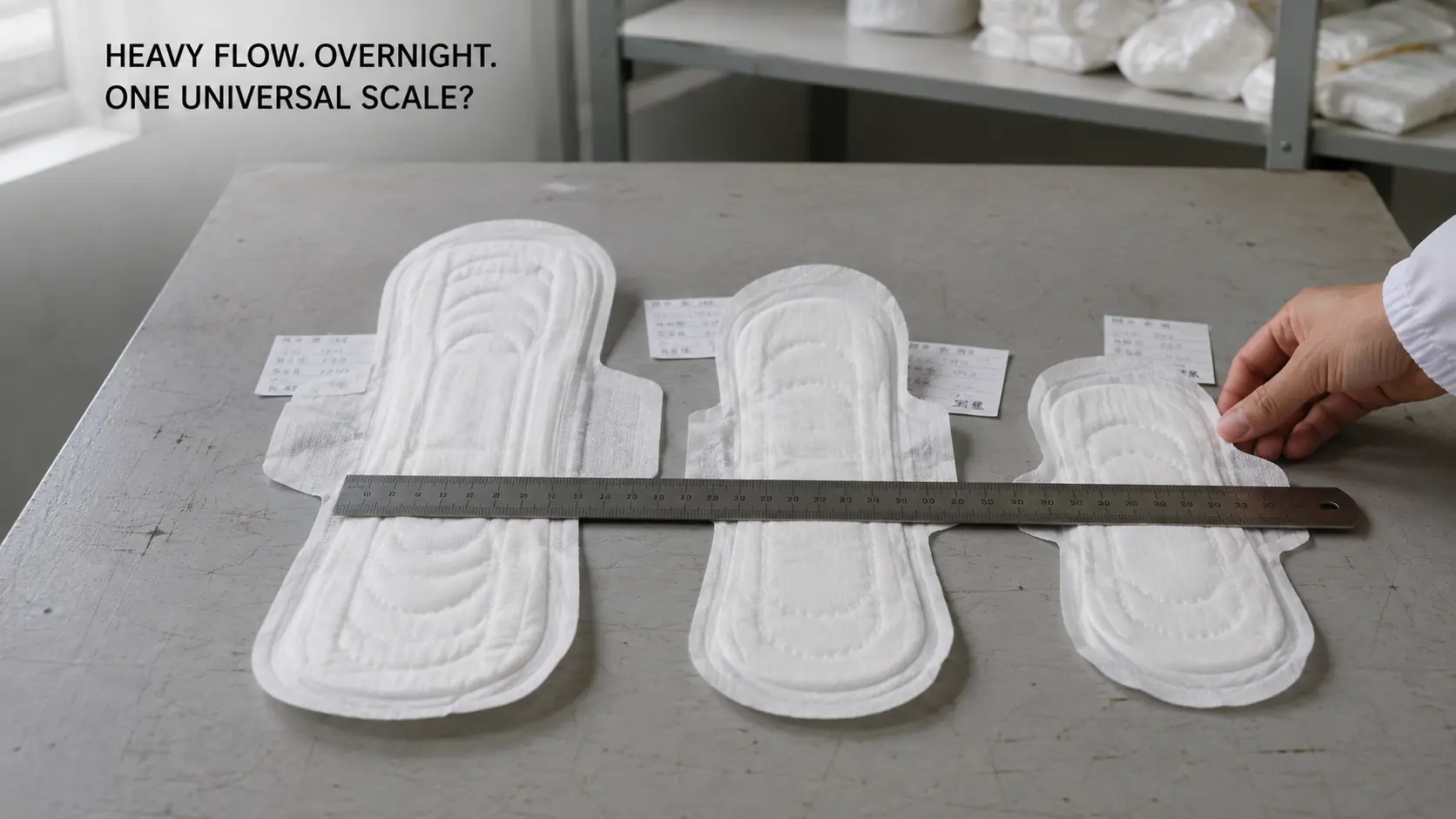 The short answer
“Heavy flow” and “overnight” can be useful navigation terms, but they are not automatically comparable between brands, product formats or countries. The definition behind the label must be checked.
What is standardised—and what is not?
The regulatory picture is fragmented by market. In June 2026, the World Health Organization noted that there is currently no global safety standard covering all menstrual materials. National rules, voluntary product standards and industry methods exist, but they do not merge into one worldwide package vocabulary.
The distinction is visible in current technical frameworks. The US FDA’s 2025 draft guidance for menstrual products recommends that manufacturers document the performance characteristics described in pad labelling. For products seeking the EU Ecolabel, Commission Decision (EU) 2023/1809 requires both technical and in-use assessment of absorption and leakage protection, skin dryness, fit, comfort and overall performance. EDANA’s femcare testing guidance also stresses test design, statistical interpretation and user trials when results are intended to inform consumers.
These frameworks help answer whether a product performs as intended. They do not assign every sanitary pad marked “Overnight” to one universal gram or millilitre range.
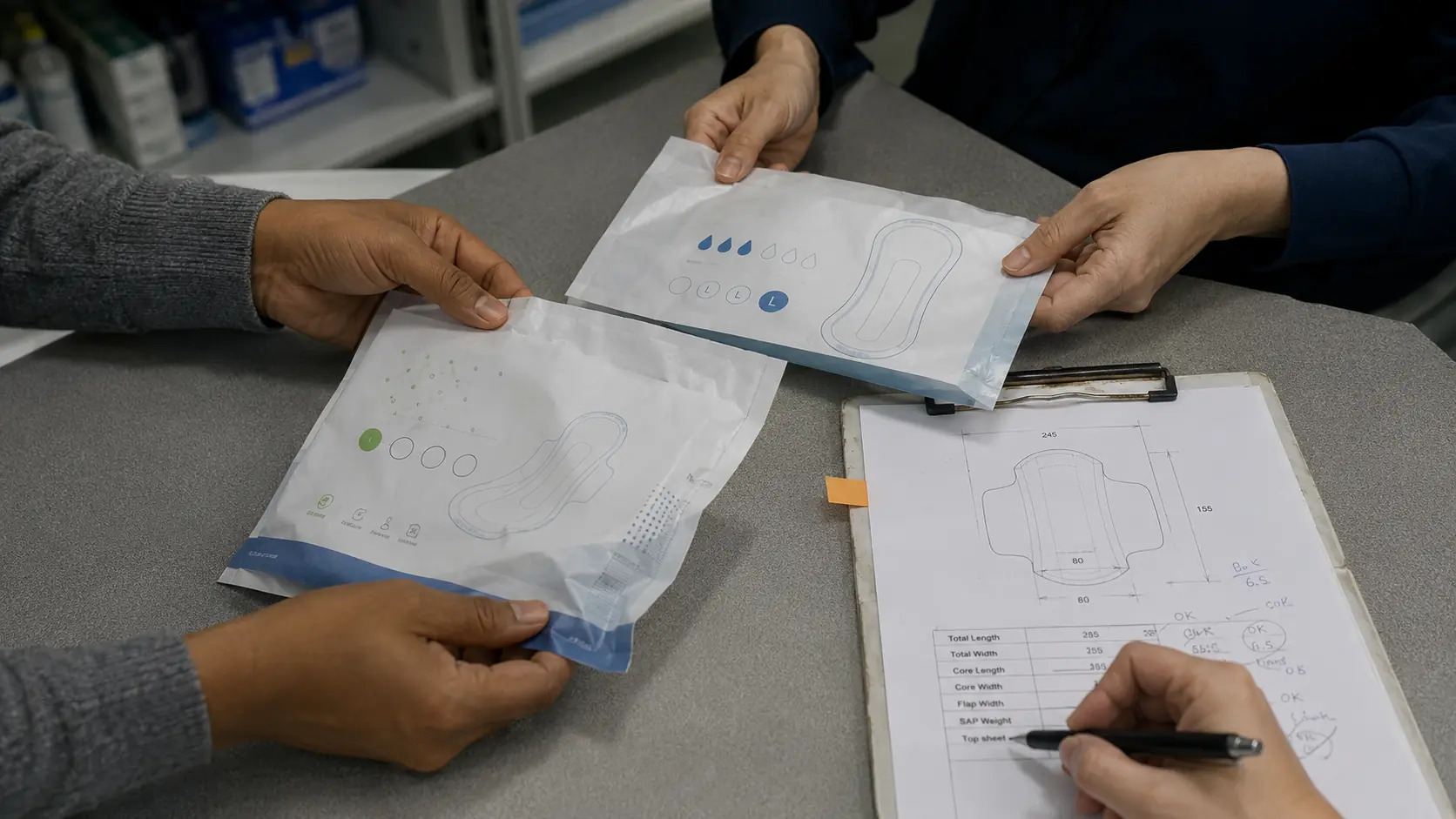 The same word on two packs does not prove that the products share the same test method, benchmark or performance threshold.
| Layer | What it can tell a buyer | What it does not prove |
|---|---|---|
| Package term | The intended place of the SKU within that brand’s range | Equivalent capacity or leak protection across brands |
| Product standard | Whether specified quality, safety or performance requirements are met | A global definition of Heavy or Overnight |
| Brand test | How one SKU compares under a stated protocol or against a stated reference | Comparability with a competitor using a different protocol |
The clearest counterexample is the tampon
In the United States, tampon absorbency terms are tied to legally defined ranges measured using the Syngyna method: Light is up to 6 grams; Regular is above 6 and up to 9 grams; Super is above 9 and up to 12 grams; Super Plus is above 12 and up to 15 grams; and Ultra is above 15 and up to 18 grams. EDANA’s 2026 European tampon code likewise uses a standardised Syngina test and a six-class droplet system.
That is what a genuine absorbency classification looks like: a named method, numerical bands and a defined label system. The pad sections of the FDA draft guidance contain no equivalent Heavy/Overnight table. The contrast matters. A shopper may see similar language on pads and tampons, but the underlying regulatory meaning is not the same.
Why “overnight” is not simply a capacity number
Overnight protection is a use case. Time matters, but so do sleeping position, movement, rear and side leakage routes, contact with the body and the ability of the pad to remain correctly placed. Brands often address this with a longer or wider back, different channel geometry, side barriers, stronger positioning features or a revised core distribution.
This is why pad length is useful but incomplete information. A longer pad can provide more coverage. It does not, by itself, prove faster acquisition, greater retained capacity, lower rewet or later leakage. Two products with the same length may use different core weights, pulp-to-SAP balances, acquisition layers, embossing patterns, backsheet constructions and adhesives.
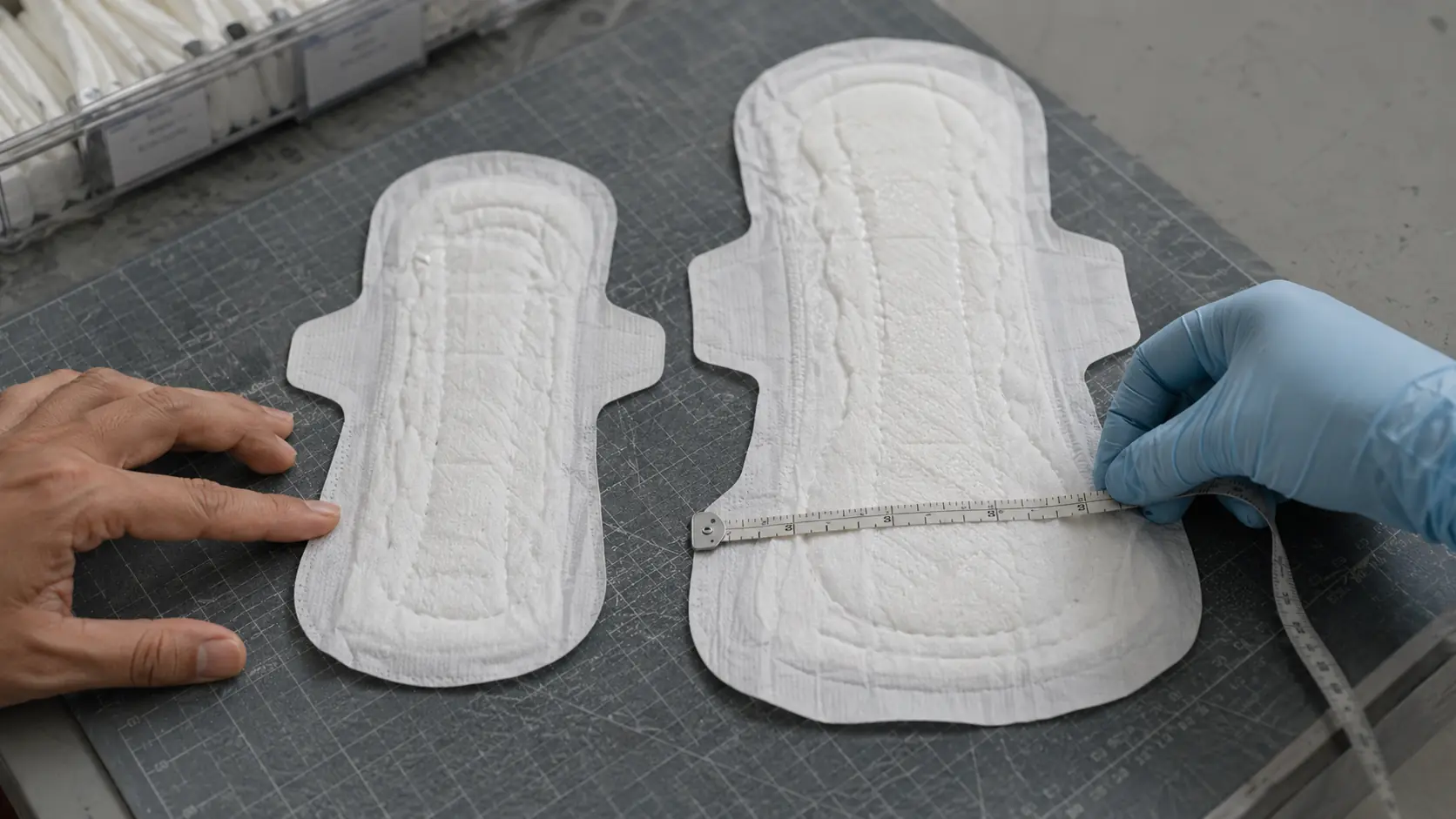 An overnight claim should connect product geometry, fluid handling and fit—not rely on length or theoretical capacity alone.
What should a private-label buyer ask instead?
The better sourcing question is not, “Can we print Overnight on the pack?” It is, “What definition and evidence will make Overnight consistent across our range?” Before comparing quotations or approving artwork, buyers should ask for five connected decisions.
- Define the intended use case. Is the SKU for heavier daytime flow, extended rear coverage at night, a longer wear claim, or a combination?
- Define the construction. Record length, width, rear geometry, core composition, acquisition and distribution layers, leakage-control features and positioning system.
- Use one test logic across the range. Compare acquisition, absorption before leakage, rewet, retention and fit under consistent sample preparation and test conditions.
- Name the benchmark. State whether a result is an absolute acceptance target, a step up from the Regular SKU or a comparison with a specific market reference.
- Verify the pack wording. Connect each word, icon and duration statement to the evidence file and complete the required local regulatory review.
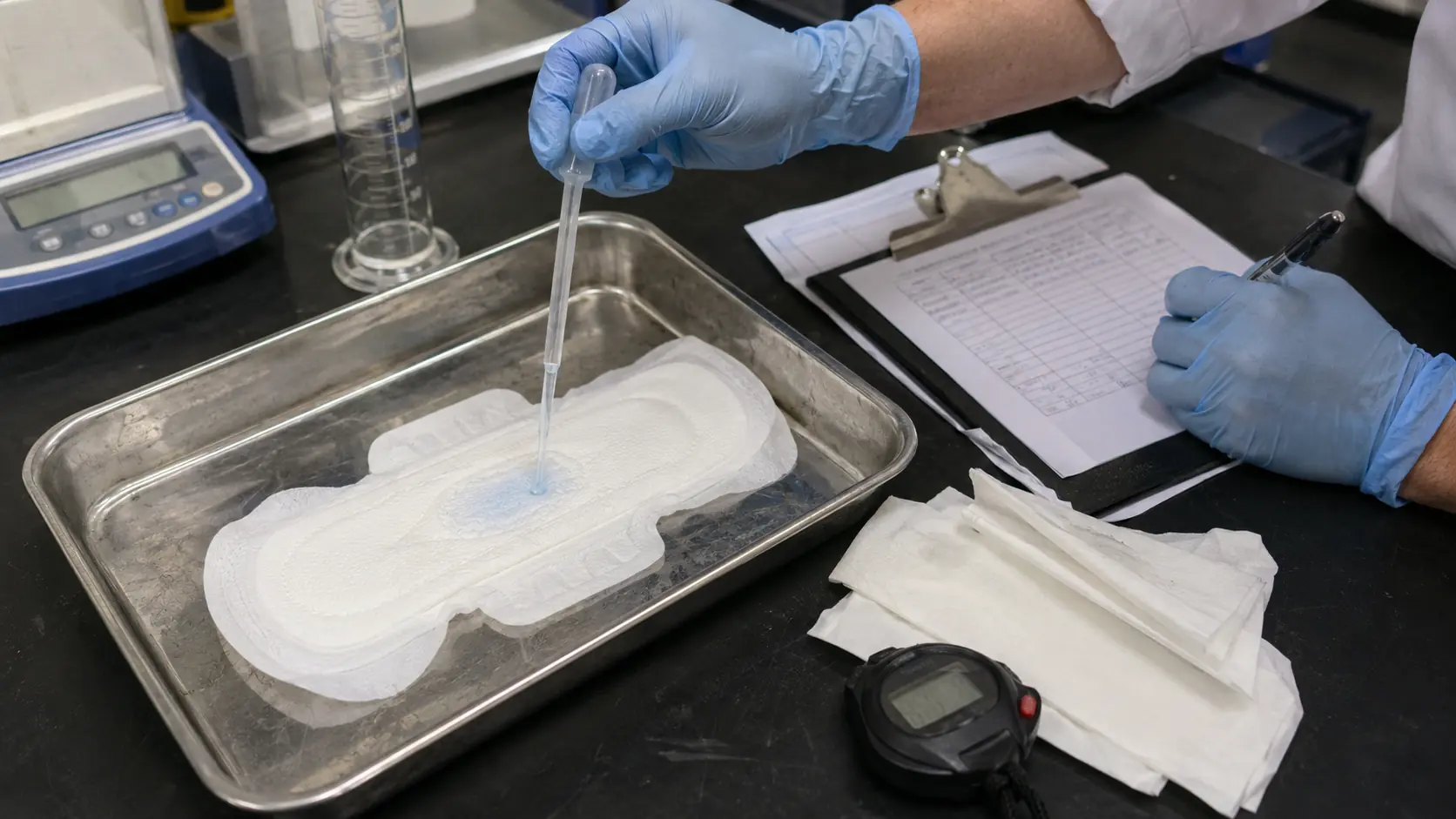 A defensible claim combines a documented bench method with evidence that reflects the intended user experience.
A timely standards reminder
As of August 2026, China’s GB/T 8939-2018 remains the current recommended national product standard for sanitary pads and panty liners. GB/T 8939-2025 has been published but is scheduled to take effect on 1 January 2027. A product-standard transition may change technical requirements; it still does not make every brand’s Overnight label globally equivalent.
Build the claim ladder before artwork approval
A well-designed range gives each step a reason to exist. Regular, Heavy Flow and Overnight should not be three different pack colours placed over nearly identical specifications. The construction, test target and user benefit should move together, and the size of each step should be visible in the product-development record.
That internal ladder becomes the brand’s own ruler. It will not turn a marketing term into a universal industry class, but it can make the term consistent, testable and easier to explain to distributors, retailers and consumers.
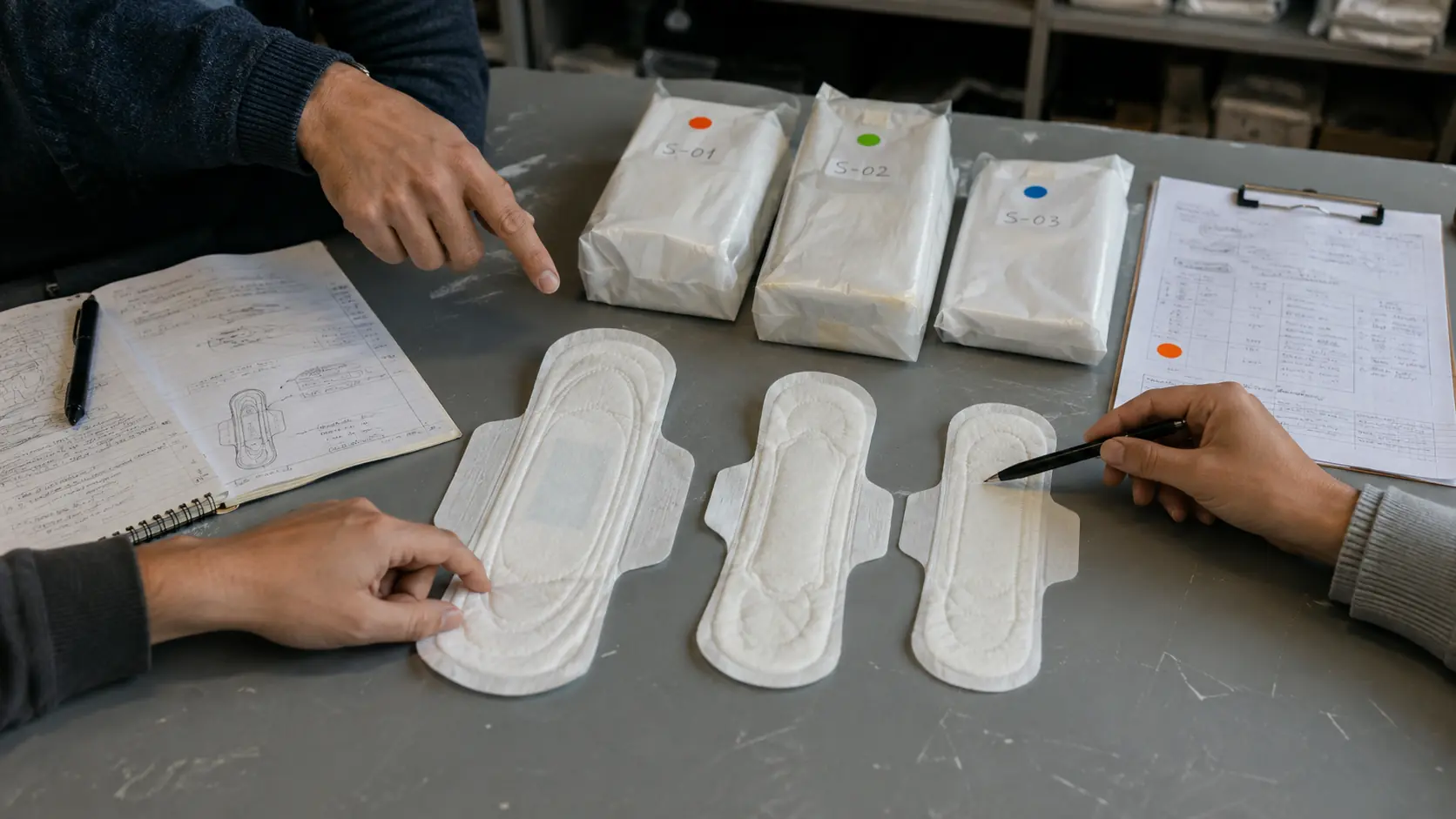 Define the product before defining the pack.
If you are developing a private-label sanitary pad range, Injeolly can support specification discussion, sample development and packaging review from the first product brief. Share the intended market, range structure and performance priorities with our team.
Reference note
Sources consulted: WHO Menstrual Health fact sheet (2026); US FDA draft menstrual-product guidance; 21 CFR 801.430; EDANA European Tampon Code of Practice (2026); Commission Decision (EU) 2023/1809, Annex I; EDANA femcare testing guidance; and China’s official standard records for GB/T 8939-2018 and GB/T 8939-2025. Regulatory requirements and guidance should be rechecked for the intended sales market before artwork approval.