Why Private Label Buyers Need More Than a Sanitary Pad Supplier
For many buyers, the first step in sourcing sanitary pads is simple: find a supplier, ask for a price, compare samples, and place an order. But private label feminine care projects are rarely that simple. A sanitary pad is not only a product. It is part of a brand promise, a retail strategy, and a daily-use experience for consumers.
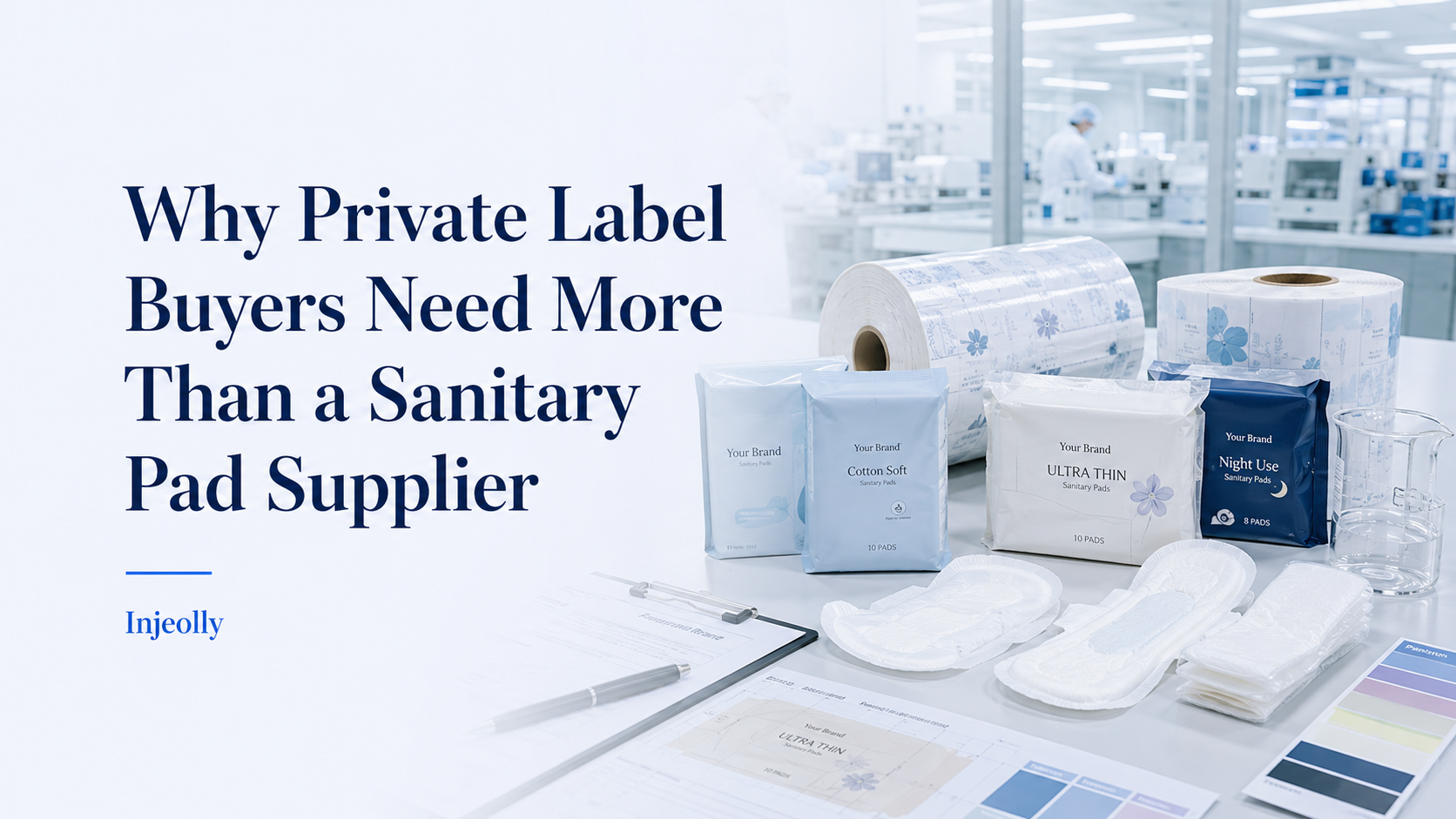
This is why private label buyers need more than a sanitary pad supplier. They need a manufacturing partner who can support product selection, material decisions, packaging customization, quality control, production planning, and export coordination.
A Supplier Provides Products. A Partner Supports Decisions.
A basic supplier may only provide a product list and quotation. This can be enough for simple trading orders, but it is often not enough for a private label project. Private label buyers need to make decisions about size, absorbency, top sheet material, back sheet, wings, adhesive, individual wrapping, outer packaging, carton packing, and market positioning.
Without clear support, buyers may choose a product that looks acceptable but does not match the expectations of their target consumers. A reliable manufacturing partner should help buyers understand available options and avoid unnecessary mistakes before mass production.
Product Structure Matters
Sanitary pads may look similar from the outside, but their internal structure can be very different. Material softness, absorbent core design, surface dryness, leak protection, adhesive strength, and fit all affect the final user experience. These details are especially important when buyers want to build a long-term private label brand rather than sell one short-term shipment.
Before confirming a product, buyers should compare specifications carefully. Product length, width, absorbency level, thickness, packaging style, and usage scenario should be matched with local market habits. A product designed for one market may not automatically fit another market.
Packaging Is Part of the Product
For private label sanitary pads, packaging is not only decoration. It communicates positioning, trust, product function, and shelf value. The outer package, individual wrap, color direction, material finish, and information layout all influence how consumers understand the product.
A professional supplier should be able to support packaging customization in a practical way. This includes confirming package size, printing requirements, material options, artwork files, barcode position, carton layout, and other production-related details. If packaging is not handled carefully, even a good product can look unprofessional in retail or online channels.
Quality Control Should Start Before Production
Quality control should not begin only after goods are finished. It should start from material confirmation and sample approval. Buyers should confirm the final specification before production and keep a clear record of approved samples, packaging files, and product details.
During mass production, the factory should control key points such as product size, absorbency performance, appearance, sealing, packaging accuracy, and carton preparation. For private label brands, these controls help reduce complaints and protect brand trust.
What Private Label Buyers Should Ask
- Can the factory recommend product structures for different market levels?
- Can the factory support custom packaging and private label artwork?
- How are samples confirmed before mass production?
- What quality checks are carried out during production?
- Can the supplier support repeat orders with stable specifications?
How Injeolly Supports Private Label Projects
Injeolly supports sanitary pad and feminine care OEM projects for international buyers. Instead of only offering standard products, Injeolly can help buyers review product options, confirm specifications, prepare packaging customization, and coordinate production requirements. This support is especially useful for distributors, importers, and new private label brands that need a practical manufacturing partner.
By combining product manufacturing, packaging support, and export communication, Injeolly helps buyers move from product idea to production-ready order with fewer unclear steps.
Final Thoughts
Choosing a private label sanitary pad supplier should not be reduced to price comparison. The better question is whether the supplier can support the full project: product choice, packaging, quality, delivery, and long-term repeat orders. For buyers building a brand, this support can be the difference between a one-time purchase and a sustainable product line.
Injeolly works with private label buyers who need reliable sanitary pad manufacturing and practical OEM support for their target markets.