
Private Label Strategy
How to Build a Private Label Sanitary Pad Brand Launch Plan: From Product Selection to First Distributor Order
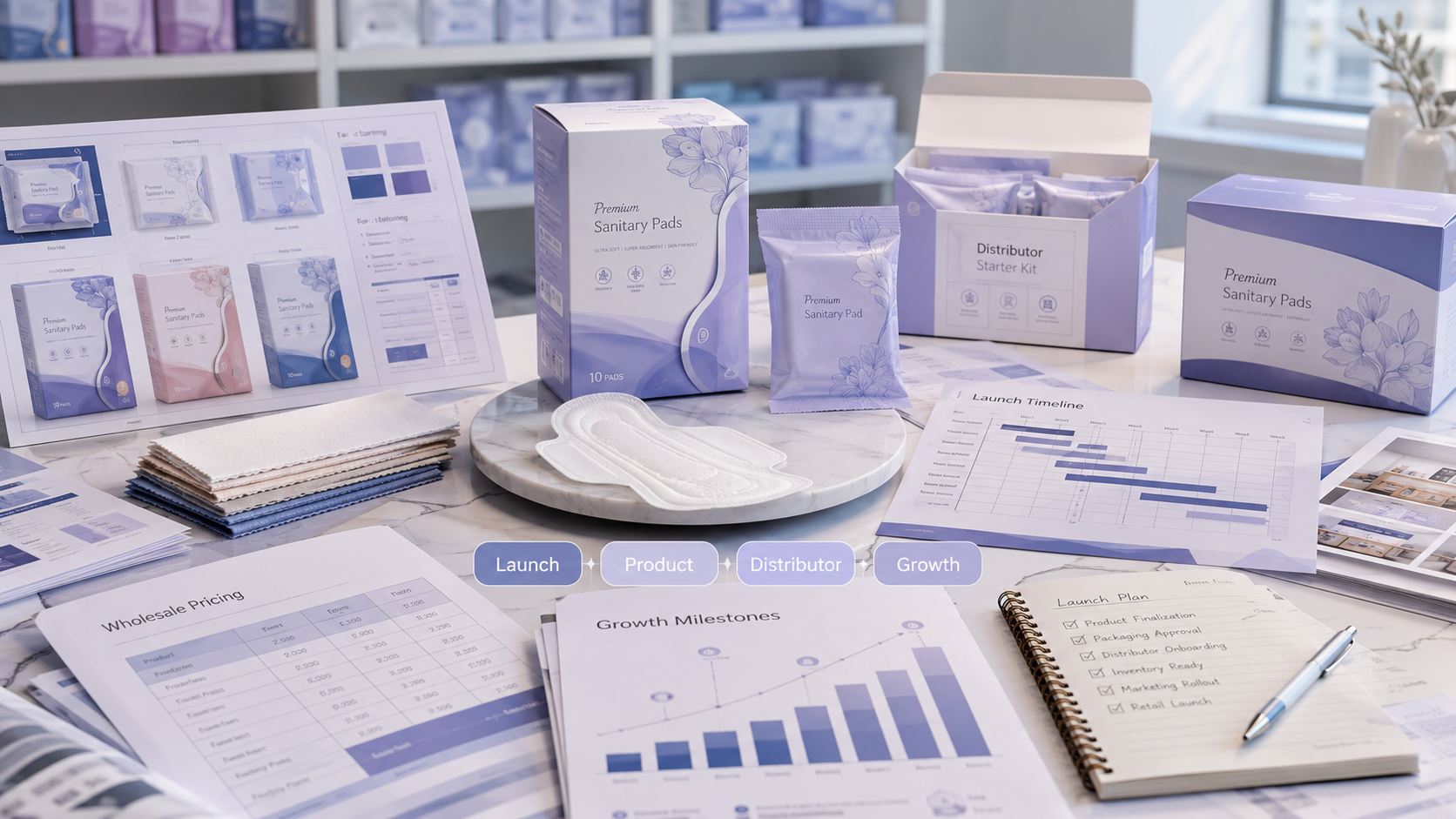
Launching a private label sanitary pad brand requires more than selecting a product and printing a logo. A structured launch plan connects product development, packaging, pricing, inventory, distributor preparation, and market entry into a practical growth roadmap.
Launch Reality Check
Many sanitary pad brands focus heavily on packaging design and underestimate distributor readiness, inventory planning, and product portfolio strategy. A beautiful package cannot compensate for missing stock, unclear pricing, or a distributor who has no idea what to sell.
The strongest private label launches are built around operational readiness. Product quality, supply reliability, packaging consistency, distributor support, and inventory planning must work together before market expansion begins.
This guide outlines a step-by-step launch framework that helps new sanitary pad brands move from concept to first distributor order while minimizing common startup mistakes.
1. Define Your Target Market First
Product selection should follow market positioning, not the other way around. Before evaluating product specifications, brands should identify who they intend to serve.
| Market Segment | Primary Need | Launch Focus |
|---|---|---|
| Value Buyers | Affordable protection | Competitive pricing |
| Mainstream Consumers | Reliable daily use | Balanced performance |
| Premium Buyers | Comfort and innovation | Premium positioning |
| Specialty Users | Specific lifestyle needs | Targeted solutions |
Factory Insight
The most successful launches usually focus on one primary customer group first. Expanding into multiple segments simultaneously often creates unnecessary complexity during the launch phase.
2. Build a Core Product Portfolio
A launch portfolio should remain focused. The objective is creating a strong foundation rather than offering every possible product variation immediately.
Recommended Launch Portfolio
- Regular day pad
- Night pad
- One value-pack configuration
- Optional pantyliner extension
- One premium SKU if market demand supports it
Limiting the initial SKU count simplifies inventory control, forecasting, packaging management, and distributor training.
3. Select Product Specifications Carefully
Product specifications affect both customer satisfaction and long-term manufacturing consistency.
| Specification Area | Launch Consideration | Business Impact |
|---|---|---|
| Pad Length | Target usage needs | Customer acceptance |
| Top Sheet | Comfort and feel | Product positioning |
| Absorbency System | Performance expectations | Consumer trust |
| Pack Count | Retail price target | Market competitiveness |
4. Develop a Clear Brand Identity
Brand identity should communicate a simple, memorable positioning. Strong brands help consumers understand why they should choose the product.
Brand Development Checklist
- Brand name and positioning statement
- Visual identity system
- Packaging architecture
- Product naming structure
- Brand story
- Key product benefits
- Consumer communication guidelines
- Retail presentation standards
Consumers should recognize the portfolio as one cohesive brand rather than unrelated products sharing similar packaging.
5. Design Packaging for Retail Success
Packaging must perform two jobs simultaneously: communicate value to consumers and remain practical for production, logistics, and retail display.
Buyer Tip
Retail buyers often review dozens of product proposals. Clear packaging architecture helps distributors and retailers understand SKU differences immediately without needing extensive explanations.
6. Build a Wholesale Pricing Structure
Pricing should support distributors, retailers, and long-term brand profitability.
| Pricing Layer | Purpose | Goal |
|---|---|---|
| Factory Price | Production economics | Maintain margin |
| Distributor Price | Wholesale support | Channel expansion |
| Retail Price | Consumer positioning | Market competitiveness |
7. Prepare Launch Inventory
Inventory planning directly affects launch success. Running out of stock immediately after launch can damage distributor confidence and delay future growth.
Factory Insight
Many brands focus on first-order production while forgetting future replenishment requirements. Launch inventory planning should include both initial stock and reorder readiness.
8. Create Distributor Sales Materials
Distributors need tools that help them evaluate and sell the product line effectively.
Distributor Starter Kit Checklist
- Product catalog
- SKU comparison sheet
- Wholesale price list
- MOQ guide
- Product samples
- Packaging visuals
- Carton specifications
- Order process guide
- Brand presentation deck
9. Build a First Distributor Acquisition Strategy
The first distributor often provides valuable market feedback that shapes future portfolio decisions.
Potential distributor channels may include:
- Regional wholesalers
- Pharmacy distributors
- Beauty product distributors
- Personal care wholesalers
- E-commerce distributors
- Modern retail suppliers
10. Structure the First Wholesale Order
The first order should be manageable and focused on learning rather than maximizing shipment volume.
| Order Component | Launch Objective | Expected Outcome |
|---|---|---|
| Core SKUs | Generate volume | Sales validation |
| Limited Premium Range | Test positioning | Consumer feedback |
| Mixed SKU Structure | Improve assortment | Inventory balance |
11. Track Launch Performance Metrics
Performance monitoring helps brands identify opportunities and problems early.
Launch KPI Dashboard
- Sales volume by SKU
- Inventory turnover rate
- Distributor reorder frequency
- Retail acceptance rate
- Average order value
- Forecast accuracy
- Stockout incidents
- Customer feedback trends
12. Common Launch Mistakes
Launching Too Many Products
Large portfolios create unnecessary inventory and operational complexity during the first launch phase.
Weak Distributor Preparation
Distributors need practical sales tools, samples, and pricing clarity to succeed.
Ignoring Inventory Planning
Poor inventory preparation can disrupt growth even when market demand is strong.
Expanding Too Quickly
Portfolio growth should follow proven sales performance and distributor feedback.
13. 90-Day Brand Launch Roadmap
Recommended Launch Timeline
| Days 1–30 | Finalize products, packaging, pricing, and distributor materials. |
| Days 31–60 | Prepare inventory, conduct distributor outreach, and distribute samples. |
| Days 61–90 | Secure first distributor orders, monitor sales, and begin reorder planning. |
Final Takeaway
A successful private label sanitary pad launch combines product quality, portfolio discipline, distributor readiness, pricing strategy, inventory planning, and operational consistency. The strongest brands build reliable foundations before pursuing aggressive expansion.
By focusing on core products, preparing distributors thoroughly, monitoring inventory carefully, and validating market demand step by step, brands can improve their chances of securing sustainable growth from the very first wholesale order.
Brand Launch Summary Checklist
- Define a clear target market.
- Build a focused launch portfolio.
- Select practical product specifications.
- Create a strong brand identity.
- Develop retail-ready packaging.
- Establish a distributor-friendly pricing structure.
- Prepare launch inventory and reorder planning.
- Create distributor sales materials.
- Secure initial wholesale partners.
- Track launch KPIs and improve continuously.