
Manufacturing & Sourcing
Private Label Sanitary Pad Barcode & Retail Compliance Guide: Product Identification, Retail Readiness, and Market Entry Requirements
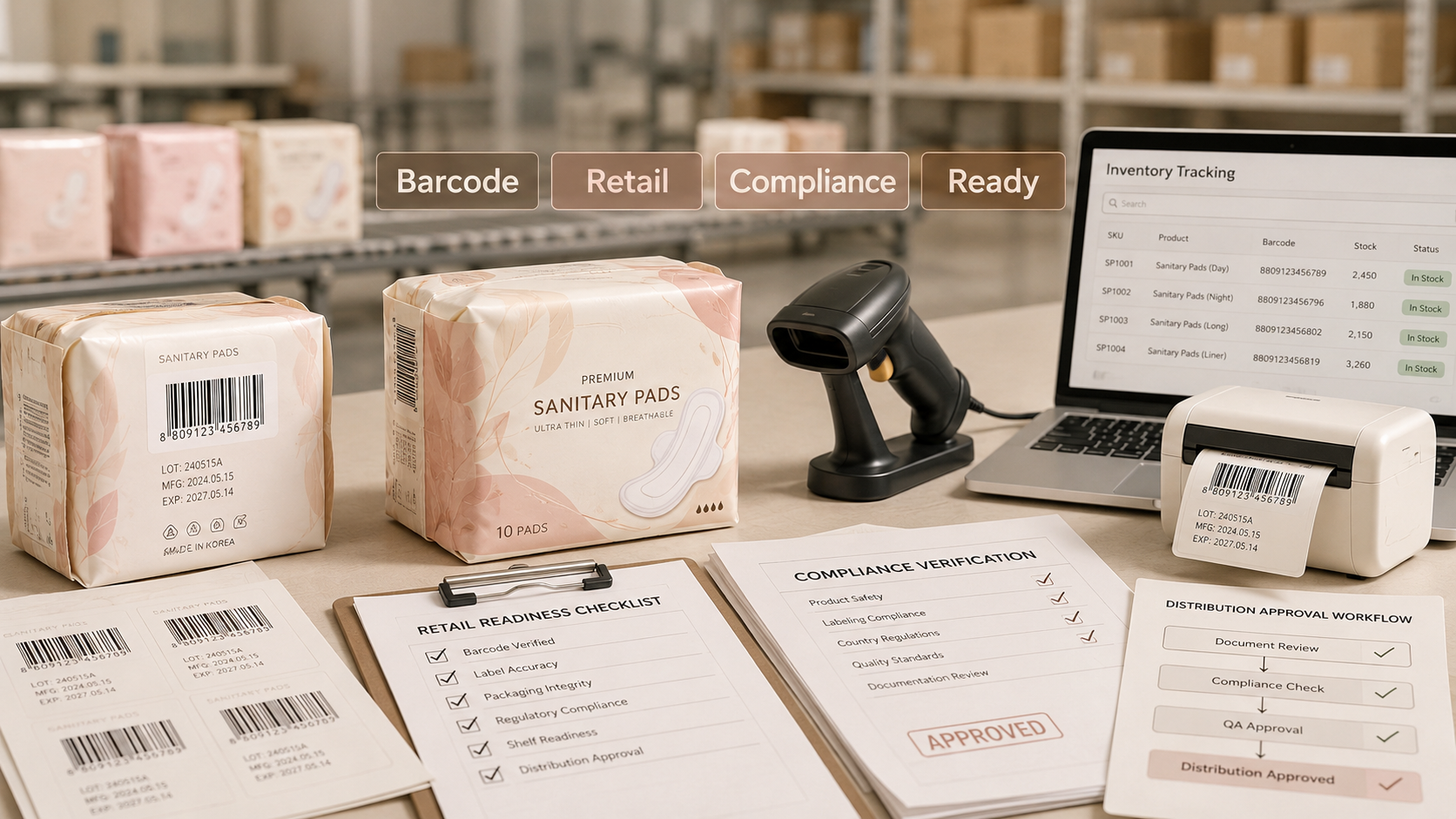
Launching a sanitary pad product requires more than manufacturing and packaging. Retailers, distributors, marketplaces, and logistics partners rely on accurate product identification and compliance systems to manage inventory, process sales, and support supply chain visibility.
Retail Readiness Starts Before Launch
Many product launch delays are not caused by manufacturing problems. They often result from barcode errors, incomplete product information, packaging compliance gaps, or retail onboarding requirements that were overlooked during development.
Modern retail systems depend on accurate product identification. Whether products are sold through supermarkets, pharmacies, wholesalers, online marketplaces, or distribution networks, barcode and compliance readiness are essential for efficient operations.
A structured compliance strategy reduces launch risks and helps products move smoothly through retail channels.
1. Why Product Identification Matters
Every sanitary pad product requires a reliable method of identification throughout the supply chain.
- Inventory management
- Retail checkout systems
- Warehouse tracking
- Product replenishment
- Distribution control
- Sales reporting
- Supply chain visibility
Factory Insight
A product may be fully manufactured and packaged, yet still face launch delays if identification systems are not compatible with retail requirements.
2. Understanding Barcode Systems
Barcodes allow products to be recognized quickly and accurately throughout commercial operations.
| Barcode Function | Operational Purpose | Business Benefit |
|---|---|---|
| Product Recognition | Item identification | Operational accuracy |
| Inventory Tracking | Stock monitoring | Inventory visibility |
| Point-of-Sale Scanning | Checkout processing | Retail efficiency |
| Distribution Control | Logistics management | Supply chain coordination |
3. Barcode Placement Best Practices
Barcode placement influences scanning performance and retail usability.
Barcode Review Checklist
- Adequate barcode size
- Clear printing quality
- Proper contrast levels
- Unobstructed placement
- Packaging compatibility
- Scanner verification
- Retail testing completed
Barcodes should remain easy to scan regardless of packaging format or retail environment.
4. Retail Compliance Fundamentals
Retail compliance ensures products meet channel-specific requirements before launch.
| Compliance Area | Purpose | Outcome |
|---|---|---|
| Packaging Information | Consumer communication | Market readiness |
| Barcode Verification | Retail compatibility | Operational efficiency |
| Packaging Standards | Supply chain support | Distribution readiness |
| Product Documentation | Commercial onboarding | Retail approval |
Buyer Note
Different retail channels may maintain different onboarding standards. Brands should verify retailer requirements before finalizing packaging and product identification systems.
5. Product Data Accuracy Requirements
Retail systems depend on accurate product information.
Core Product Data Checklist
- Product name accuracy.
- Package quantity verification.
- Product dimensions confirmation.
- Weight validation.
- Barcode matching verification.
- Packaging version control.
- Inventory coding consistency.
6. Compliance Reviews Before Launch
Comprehensive reviews help identify issues before products enter distribution channels.
| Review Area | Verification Focus | Risk Reduction |
|---|---|---|
| Packaging Review | Information accuracy | Launch readiness |
| Barcode Testing | Scanner functionality | Retail compatibility |
| Distribution Review | Logistics compatibility | Operational efficiency |
7. Retail Channel Preparation
Products should be prepared for the specific environments where they will be sold.
Factory Insight
Retail readiness extends beyond packaging. Inventory systems, logistics workflows, and documentation standards often influence onboarding success.
- Retail chain requirements
- Distributor onboarding standards
- Marketplace product setup
- Warehouse compatibility
- Shipping label requirements
- Inventory management integration
8. Common Barcode and Compliance Mistakes
| Mistake | Potential Impact | Prevention Strategy |
|---|---|---|
| Unreadable Barcode | Retail rejection | Scanner testing |
| Incorrect Product Data | Inventory issues | Data verification |
| Late Compliance Reviews | Launch delays | Early planning |
| Version Confusion | Packaging errors | Document control |
9. Distribution and Inventory Readiness
Efficient distribution systems rely on accurate product identification and standardized operational processes.
Distribution Readiness Checklist
- Barcode verification completed.
- Packaging information validated.
- Inventory codes confirmed.
- Warehouse compatibility reviewed.
- Retail documentation prepared.
- Product data approved.
- Launch records archived.
10. Market Entry Preparation Framework
Phase 1: Product Identification
Establish accurate barcode and product coding systems.
Phase 2: Compliance Verification
Review packaging, documentation, and operational requirements.
Phase 3: Retail Readiness
Prepare products for channel-specific onboarding requirements.
Phase 4: Launch Execution
Coordinate inventory, distribution, and market activation activities.
11. Retail Compliance Excellence Roadmap
Recommended Compliance Process
| Step 1 | Create product identification standards. |
| Step 2 | Implement barcode verification. |
| Step 3 | Review retail requirements. |
| Step 4 | Validate product data. |
| Step 5 | Complete compliance audits. |
| Step 6 | Launch with documented approval records. |
Final Takeaway
Barcode management and retail compliance are foundational components of successful sanitary pad product launches. Accurate identification systems support inventory control, retail operations, logistics efficiency, and consumer accessibility.
Private label brands that prioritize barcode verification, compliance reviews, product data accuracy, and retail readiness planning often experience smoother market entry, stronger operational performance, and fewer launch disruptions. In modern retail, product visibility begins with product identification.